With the recent shift from traditional marketing to a digitalised one in the late 20s, the trends of business promotion have also undergone a profound change.
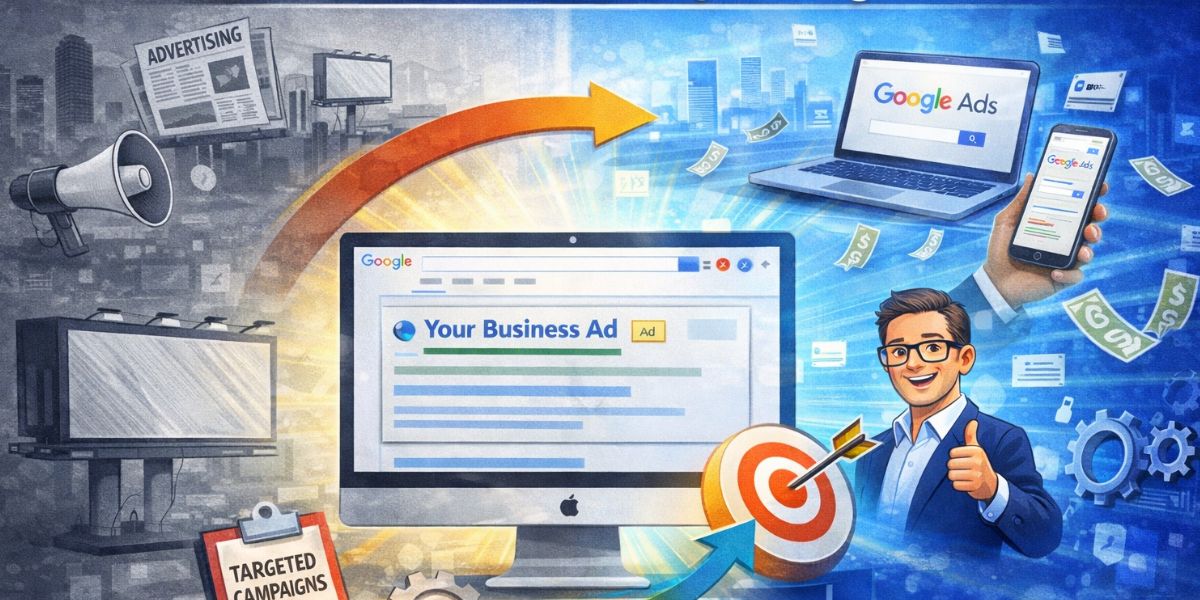
Google Ads has emerged as a powerful online platform for digital advertising. From creating to managing tailored business ads, this platform helps you reach a broader audience who are the most qualified and actively searching for the services/products you offer.
Honestly, through Google Ads, your brand starts appearing at the top of the search results in no time.
…but only if you utilize the platform the right way!
Hello everyone.
Welcome to today’s blog, where we’ll be discussing Google Ads updates October 2025 news that changed the entire course of Google advertising and keyword bidding strategies entirely.
Stay hooked till the end if you want to learn about the profound impact of this update and how it re-shaped the definition of Google advertising.
Google Ads Updates October 2025 News: The Importance

Before we discuss why the updates were so important, it’s important to know that businesses usually opt for Google Ads & PPC (Pay-Per-Click) marketing because strategic bidding on industry-relevant keywords helps them reach their targeted audience much faster.
By running dedicated Google Ads campaigns, businesses can also manage their advertising campaigns on multiple platforms (Search, Discover, YouTube, Maps) in one go!
…The Major Update on Google
Google now relies heavily on AI (Gemini 2.0) & its Large Language Model analyzes the search queries according to the intent.

Also, the search engine now optimizes ads based on AI-powered bidding, making it necessary for the brand advertisers to learn about the updates for better results.
So, without the basic knowledge of how Google now operates & processes the search queries, it’ll be even more challenging for you to place your bids the right way & make your brand appear at the top of the SERPs.
Google Reshaping Digital Advertising
Due to this Google Ads update October 2025 news, the user behavior has also evolved. Now Search has become more complex, requiring flexible & more relevant ads for brand advertising to ensure the best user experience.
This has led to fierce industry competition with a sharp rise in Costs Per Click (CPC). To cut through this intense niche competition & demanding business landscape, business owners are utilising the power of automation rapidly for leveraging Machine Learning faster, quicker, & getting data-driven results.

So, being aware of such regular Google updates & the interface will help you stay ahead in the competition.
…because the Google Ads trends are evolving every single day & not staying updated means becoming irrelevant and outdated in the industry, even if you have the best advertising strategy.
Google Ads Updates October 2025 News: Major Changes
In October 2025, Google Ads policies went through some major changes, and from October 28, 2025, the search engine started enforcing them.
To put a stop to dishonest pricing policies, Google updated its search engine policies that would suspend accounts involved in such activities with a prior warning.

Though the prompt mentioned ill practices conducted on any Google platform that violate Child Sexual Abuse (CSAE) & Sweepstakes/Casino policies, the recent update also takes any fraudulent activity related to pricing, transparency breaches, & violation of clear terms for all products into account.
The sole purpose was to prevent user deception & make sure that all Google ads match the landing page realities.
Key Google Ads Updates October 2025 News
✔️Advertisers Must Maintain Total Transparency
👉Google advertisements must be honest and upfront about pricing. All extra costs (taxes, shipping, service charges, processing fees) should be mentioned clearly within the pricing structure.
👉Advertisers can’t use confusing technical jargon & unreadable font to hide the actual cost or show it at the time of checkout. The Google Ad must show the final price or the monthly price for a subscription plan.

👉Moreover, the Google Ad should clearly mention if it’s a one-time purchase, a subscription, or a free trial (initially) that will turn into a paid service in the future.
👉All Google Advertisers must mention all this information clearly before a user enters their personal information or credit card credentials and clicks on “I agree.”
For example, Google advertisers must mention the breakdown of a product’s cost clearly (including the taxes/shipping charges) rather than making it appear later as hidden charges.
✔️No Bait-and-Switch
Advertisers can’t lure users with a fake deal (link bait that shows a specific product is already sold out or out of stock) & sell them an expensive alternative instead.

For example, you just find a Google ad that shows you a TV for $50. Now, when you visit the website, it can’t show you that it’s already “sold out” or “ out of stock”. Also, the company can’t sell you an expensive alternative for $500 instead.
✔️No Hidden Fees
The total price for a product that users see on Google Ads is the final price they will pay for purchasing that product. Companies can’t add surprise/hidden charges at the last minute in the name of “service”/ “processing” fees that were not mentioned earlier.

For example, you want to book a hotel for $500 because that’s the price you saw on Google Ads. Now, the hotel agency can’t charge you $100 or $50 extra at the last minute.
Also, mentioning these hidden charges in tiny print earlier is also against the recent Google update. The hotel company must mention all these charges at the time of posting the Google Ad.
✔️Accurate Free Claims
👉If the users see something on Google as “free”, it must cost them nothing!
👉If they have to pay money for that product/service, it’s not free, and hence advertisers or brand owners must never make such false claims.
👉Any “free trial” offer must clearly tell you before you sign up or subscribe. Also, the company must mention clearly when they will start charging you, how much they will deduct, and how to cancel your subscription to avoid these charges.

For example, if you see a service ad on Google like “1 Month Free Trial”, you are supposed to pay nothing for that. The ad should clearly mention “Start your free trial” or “no credit card required”.
If you are charged anything for your trial or you are asked to enter your credit card information, the advertisers must put it that way earlier. (like “Trial ends in 30 days, we’ll charge $20/month unless cancelled.
✔️Ad Consistency
👉Whatever a brand promises in its ads must match the landing page content. In simple words, when the users land on the website after watching Google ads, they should see the exact information ( in terms of pricing, product details, etc.) they saw on Google.
👉For vehicle ads, all the technical details like the VIN must be identical in both Google ads and the landing page.

👉The sellers should clearly mention the pricing details and break down the pricing structure at the time of posting the Ad (if they charge anything extra). Charging any hidden cost later is strictly banned.
For example, if you see a car on Google for $30,000, the price of the same car cannot be $35,000 on the website.
✔️The Strict Timeline for Enforcement

The enforcement of these policies has been carried out by Google since 28 October, 2025.
👉It took Google around 4 weeks to enforce these policy updates on all Google accounts.
👉So, by the end of November 2025, all Google accounts basically come directly under this policy enforcement.
👉If the search engine finds a policy breach from any account, it won’t ban it instantly.
👉The seller will get a 7-day warning to fix the issue first.
👉Upon failure to fix such issues, Google will suspend that Google account.
Platform & Feature Enhancements
Google Ads started focusing on automated, fully AI-powered, & privacy-centric advertising since the update was launched in October 2025.
The key updates also resulted in some major changes on the Google advertising platforms as well as in its features.
Google Ads API Version 22 Release
➡️Generative AI Assets (Beta) now lets developers & advertisers use AI to create text & images automatically through an API. It saves the advertisers a lot of time and manual effort to craft engaging ad headlines and create tailored images.
➡️The Performance Max AI helps you in resizing your images automatically based on your platform requirements. Also, the AI will help you select the most relevant images from your landing page for ad creation.
➡️Advertisers can now use “Target Cost-Per-Click” bidding to manage their budget due to Demand Gen Improvements. They can focus on campaigns that target specific Google Ads platforms (YouTube, Discover, Gmail).
Demand Gen improvements have revolutionized the traditional patterns of ad creation by turning your static images/texts into videos.

➡️Expanded smart bidding & target ROAS strategies help you place AI-powered bids on ads for maximized returns. Advertisers, now, can analyze & track their bidding performance & place diverse bids on time to get the best results.
➡️The changes made to App Campaigns (ACi) bidding policies for new advertisers help you run dedicated campaigns to grow your user base without the need to set a strict “Target Cost Per Acquisition” and Return on Ad Spend.
However, there are also some restrictions that you need to consider.
For example–

👉You can’t create new shared ads & must create unique ads for each ad group (identical ad creatives or headlines won’t help if you’re trying to sell two closely related or similar products, for example, two pairs of shoes in different colors). All the existing and old shared ads will stop running by early 2026.
👉Strict verification is needed on platforms like WhatsApp to ensure your ad/branding message assets relate directly to your own company.
👉According to the update on October 30, 2025, unverified message assets won’t serve. Advertisers must verify their message assets via a WhatsApp link first.
👉Also, the advertisers’ accounts must have a good policy compliance history and should be directly linked to the advertising company’s landing page.
User-Facing Interface & Search Changes
The October 2025 Google update introduced significant changes to Search and Discover to ensure better user control over ad visibility, which greatly impacted the Click-Through Rate dynamics.
✅Instead of showing scattered ads, Google now focuses on grouping ads into a single section of “Sponsored Results” that shrinks or disappears when users click on the option given below. In short, the update centers on assembling the ads into one single space.

✅Instead of a small individual “Ad” tag, the Google Ads are now grouped under a single, bigger, & more prominently visible heading.
✅Users can hide the sponsored results by clicking the button below that says “Hide sponsored results.”
✅When the ads collapse, the header “Show sponsored Results” is still visible as a small, sticky banner at the top of the SERP.

✅Hiding ads applies to that specific search session. The sponsored results will reappear by default when you initiate a new search on Google.
✅All these features have been implemented globally across mobile devices, tablets, laptops, and desktops.
✅The “Sponsored Results”, the header, and the button to hide them may appear above or below AI Overviews.
The Impact on CTR & Ad Visibility on Google

☑️According to some reports & studies, the option to “Hide sponsored results” has led to a reduced number of Click-Through Rates and impressions for advertisers.
☑️This has negatively affected the marketing efforts of advertisers who have been looking forward to organic impressions and brand growth.
☑️Moreover, the update puts significant pressure on the advertisers to create better ad creatives that are relatable to the prospects for improved quality scores.
Otherwise, the engagement rates might drop because users have the full authority to skip an ad block entirely anytime they want.
Intent-Based Shifts & Higher Value for Organic Traffic
For all these updates & changes made to Google Ads features, the user behavior in terms of site navigation patterns & click rates has also changed.
When users hide the sponsored results, organic search results get immediate & prime inline visibility, making it mandatory for the brand SEO experts to focus on the implementation of improved strategies.

Since ad visibility has become more user-controlled, Google advertisers like us do not rely solely on broader or long-tail keywords these days. Instead, they focus on targeting high-intent keywords to ensure ad relevance.
Google Ads Updates October 2025 News: Trust & Verification Features
In October 2025, Google introduced the iconic “Google Verified” badge for Local Services Ads (LSAs) that entirely transformed the age-old Google Ads practices.
This concept unified all the previous trust signals, like:
✔️Google Guaranteed
✔️Google Screened
✔️License verified
…into one clear icon.
This totally replaced the separate badges and put an end to the Money Back Guarantee for improved trust.

Google Verified Badge for Local Businesses
Google business accounts with this badge indicate that these businesses have passed the search engine’s screening and verification. Hence, these businesses are credible and vetted.
All local businesses must pass Google’s screening and verification processes to be eligible for posting Google Ads.
So, on one hand, consumers can easily identify the most trusted local businesses because of this badge; on the other hand, advertisers have reportedly found it easier to boost their brand credibility as they don’t need to use multiple badges now to signal consistent and reliable brand identity.
Improvements in Terms of Advertising & Reporting
These Google Ads updates October 2025 news also focus on increased transparency in automated campaigns & improving the quality of the creatives.
This resulted in enhanced features for carrying out PMax campaigns like a pro.

For example:
👉All PMax campaigns now feature detailed channel performance reporting & asset breakdowns (clicks, conversions, value, cost) by individual platforms (YouTube, Discover, Gmail, Maps)
👉Advertisers now get much clearer & detailed reports on their ads due to this PMax feature that shows exactly which ads work the best on which device, at what time, via which Google network, and for what types of goals they are good.
👉Advertisers can now track the number of clicks, costs, and conversions, and they can download these reports directly from the platform for future analysis or even export them to Excel.
👉Agencies can manage multiple clients with the PMax campaign feature & see a combined view of how their Google Ads campaigns for multiple clients perform across different platforms in one place.
All these updated features made it easier for Google advertisers to track the exact number of new high-value customers, see where their ads exactly appear and how the ads are placed on the platform, & exercise better control over the ad quality, fix dashboard issues, and ensure improved engagement across different Google Ads platforms.
AI & Personalization Developments Affecting Ads
The AI-powered LLM of Google has now transformed the advertising practices into a dynamic one.
The LLM is driven by Gemini 2. O, a subset of multimodal AI models that handle multiple activities together, generating personalized content creation and globally relevant Ads generation.

Here is What Google Ads Updates October 2025 News Include:
➡️Google Ads now appear during searches when users are likely to make a purchase
➡️Gemini analyzes user conversations to show personalized ads with value-based discounts & free-shipping offers
➡️The AI model no longer works as an information intermediary; rather, it works as a transaction enabler, allowing users make in-chat purchases.
However, The Advantages Are Endless
☑️Google AI predicts the right audience base & shows relevant business ads to the right people
☑️Online retailers are now using Gemini as their “business agents” who answer their product queries in a personalized brand voice
☑️Using AI is fundamental in improving unique user experiences, as the customer/client interaction is going to be replaced with an AI-driven one soon
These AI-powered Google Ads are dominating the international consumer market as well, making the brands reach a larger audience in no time.
However, Google’s updated policies have restricted ads in sensitive categories such as healthcare, finance, gambling, & politics (Your Money Your Life [YMYL]) for preventing industry scams.
Google Ads Updates October 2025 News Impacting Industry Trends

Ad fraud in 2025 emerged as one of the biggest concerns for consumers as well as advertisers, so much so that the global Invalid Traffic (IVT) rates increased over 20% in 2025.
Google ad fraud mainly includes non-human impressions, moving advertising money from traditional TV to Connected TV (CTV), marketing spend leakage due to automated bot networks, and more.
The Current Industry Advertising Practices
Google’s Data Manager now unifies business data from multiple sources (website, apps, CRMs) to reduce reliance on third-party cookies.
Also, the search engine’s LLM now focuses on real-time, predictive ad display based on the full customer journey from ad exposure to in-store purchase.
With these, Google advertisers now focus on first-party data inputs, creative strategy development, tech validation, & cross platform analytics to boost their ROIs and reduce CPA.
Google Ads Updates October 2025 News Influencing Daily Campaigns

✅The AI-driven ad creation & bidding practices have totally replaced manual CPCs & bid adjustments.
✅Advertisers now focus on ad optimization based on predictive conversion value & not clicks alone.
✅With AI-powered smart bidding strategies, advertisers are now capable of detecting users’ intent way more effectively & customizing ad creatives accordingly.
However, since AI-overviews answer search queries directly and ad placements are mainly handled by generative AI, Google Ads experts often struggle to get ad clicks.
That’s why they focus on isolating brand traffic into dedicated PMax campaigns for easier ad placement tracking, keyword bidding, & new customer acquisition.
Google Ads Updates October 2025 News: The Major Transition

To be honest, the era of manual ad bidding, slow ad creative generation, & manual tracking of ad clicks is gone…
This is the age of AI-first, intent-driven advertising that focuses on merging automation with first-party data collection & utilization for running tailored, dedicated, personalized, & conversion-focused campaigns.
Google Ads now provides advertisers with better audience insights by predicting customer purchase intent, which reshaped the definition of traditional Google Ads practices & how prospects engage with them.
Now, it’s more effective, free from potential scams, & smarter.
That’s it for today.
Connect with us for all your digital marketing & Google business ads needs.