Multilingual SEO services
Handle different languages, such as English, Arabic and German.
Leelija’s international SEO services fix that. We research each market separately, set up the right site structure and hreflang, localize the pages that sell, and report results country by country. We work across the USA, UK, Europe, Australia, the UAE and India, and help Indian businesses take their first step abroad.
 USA
 UK
 Europe
 Australia
 UAE
 India
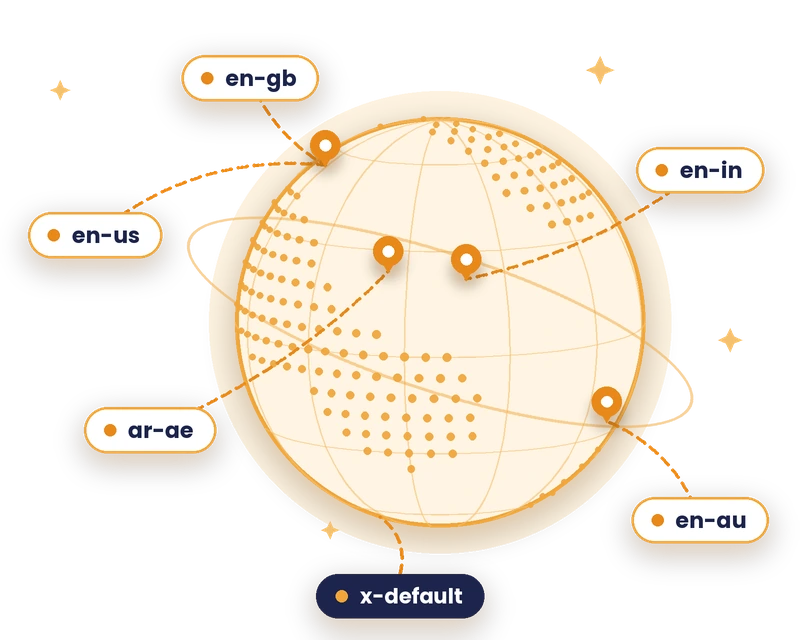

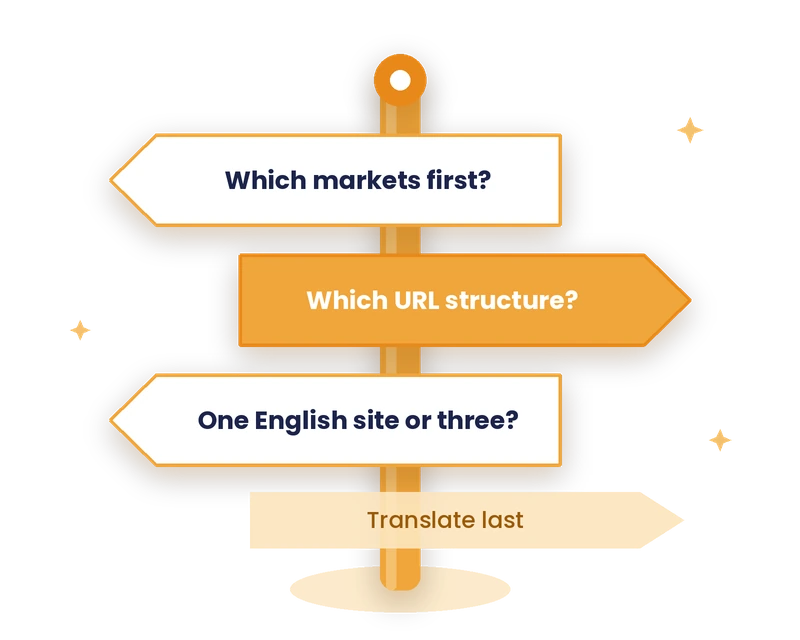
Most international sites fail on decisions made before a word is translated. Which markets first. Which URL structure. Whether “en” means one page for every English speaker or three pages for three countries.
Get those wrong and you spend months fixing duplicate content, the wrong page ranking in the wrong country, or a beautiful German site that Google barely indexes.
We start there. Then we translate. That’s what international SEO for global businesses should look like: decisions first, words second.
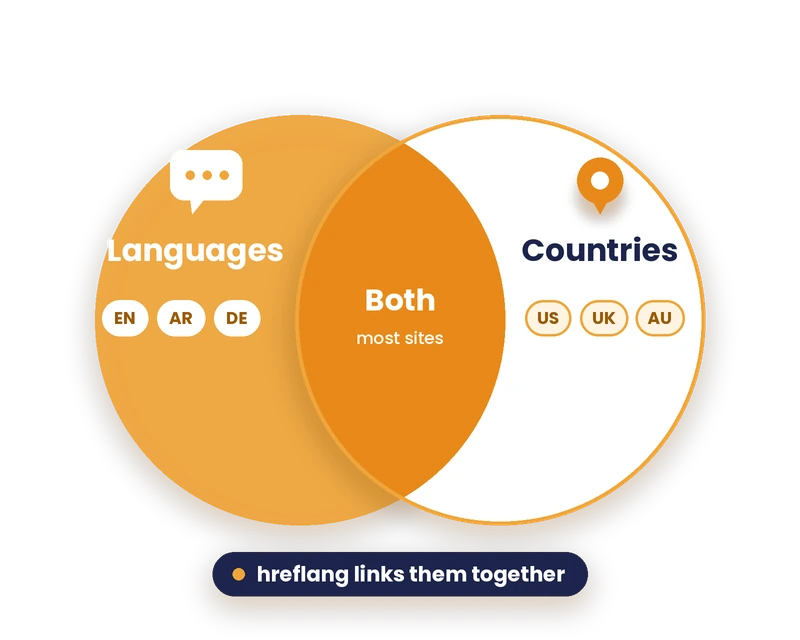
International SEO services help a website rank in more than one country or language by matching each market’s search behavior, using a clear site structure, and signaling to search engines which version of a page belongs to which audience.
Handle different languages, such as English, Arabic and German.
Handle different countries, even when they share a language.
Based on Google’s guidance on multi-regional sites.
Country domain (ccTLD)
example.co.uk
Strongest country signal; local trust
Costly; each domain builds authority from zero
Subdomain
uk.example.com
Separate hosting or teams per market
Less obvious to users; authority partly split
Subfolder
Our usual pickexample.com/uk/
Most businesses; one domain, low maintenance
Country signal relies more on hreflang and content
URL parameter
Not recommendedexample.com?loc=uk
Not recommended by Google
Hard to segment; unclear targeting
Google also notes that it mostly crawls from the US and ignores location meta tags, so any site that changes content by visitor IP risks Google never seeing the other versions.
 The right page ranks in the right country
Local keywords, not translated guesses
Prices, currency and contact details that fit each market
No duplicate content between your English versions
A structure you can add markets to later
Separate reporting for every country
Not sure which markets to enter first?
Plan Your International SEOOne service page with US, UK, Australian, UAE (English and Arabic) and Indian versions. The same block goes on every version:
Note “en-gb”, not “en-uk”
Google says reserved codes like UK and EU have no effect in hreflang.
x-default covers everyone else
It is the fallback for visitors who match none of the listed versions.
List every version
Each page lists itself and all the others.
Links go both ways
If A points to B, B must point back to A.
Use ISO codes
Language first, then an optional country.
Rules from Google’s hreflang documentation.
The same service page needs different spelling, prices and trust signals in each country.
We evaluate search demand, competition and business readiness across potential countries to identify the most valuable international markets for your business and prioritise where to expand first. Timeline: Weeks 1–2.
We research local keywords, regional competitors and buyer questions in each target market to understand local search behaviour, identify opportunities and build a market-specific SEO strategy. Timeline: Weeks 2–4.
We plan the international website structure, define the appropriate URL approach, create an hreflang mapping strategy and design a language or country switcher to help search engines and visitors navigate the right versions of your website. Timeline: Weeks 3–4.
We develop and optimise priority market-specific pages, implement hreflang tags, configure XML sitemaps and add relevant structured data to support international targeting and local search visibility. Timeline: Weeks 4–10.
We check indexing, verify hreflang implementation and return links, and review local search results to ensure each market has the correct pages appearing in relevant search results. Timeline: Weeks 8–12.
We continue expanding localised content, building relevant regional links and monitoring organic performance through separate market-level reports. We use the results to refine the strategy and identify new growth opportunities. Timeline: Monthly.
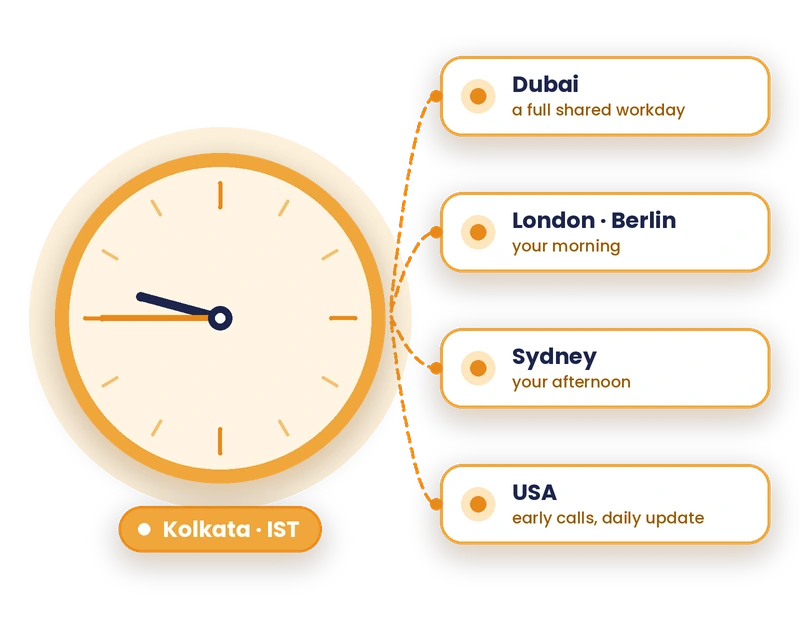
Our team sits in Kolkata, India (IST, UTC+5:30). That’s a full shared workday with Dubai, your morning in London or Berlin, and your afternoon in Sydney. US clients get early-morning calls and a written update every day, so work keeps moving while you sleep.
Our hours overlap with clients from Dubai to Sydney, and we invoice in your regional currency, so each team can pay in its own.
Invoices in Your Regional Currency
Pay in the currency that works best for your business.
We serve clients in the US, UK, Europe, Australia, the UAE and India, so local differences are part of our daily work.
Hreflang, structure and templates by our technical SEO team; localized pages by our content team.
You see what each country brings in, so you can decide where to invest next.
Fluent human review on every published language. No unedited machine output.
International SEO consulting quality at a fraction of US and European agency prices.
How do you decide between a ccTLD, subdomain and subfolder for us?
Do you research keywords in each market, or translate the English list?
Who reviews translations, and are they fluent speakers?
How do you test hreflang after launch?
Will you report results per country?
How would you handle Arabic or other right-to-left languages?
Warning signs to consider before choosing an international SEO agency.
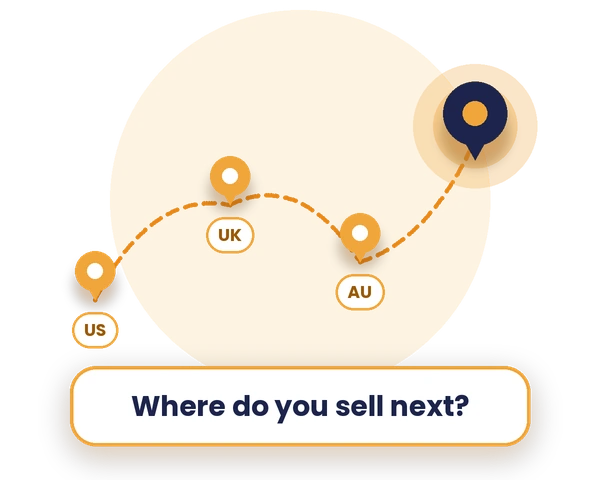
Tell us where you sell now and where you want to sell next. We’ll check your current setup and suggest a sensible order of markets.
Plan Your International SEOLeelija Web Solutions Pvt. Ltd. is led by Safikul Islam, CEO, and based in Barasat, Kolkata, India.
USA UK Europe Australia UAE India
Endurix is a community-driven running club dedicated to helping runners of all levels train smarter, race harder and recover better.

International SEO services help one business rank in several countries or languages. The work covers choosing markets, researching how people search in each one, picking a URL structure, setting up hreflang so Google shows the right version, localizing content and building local authority. Leelija handles the strategy and the technical setup, and reports results market by market rather than as one global number.
Multilingual SEO targets different languages, for example English, Arabic and German. Multi-country SEO targets different countries, even in the same language, for example the US, UK and Australia. Most global businesses need both: a site serving the UAE in English and Arabic, and Germany and Austria in German, is doing multilingual and multi-country SEO at once.
For most businesses, subfolders (example.com/uk/) are the simplest and cheapest to run, because every market shares the main domain’s authority. Country domains (example.co.uk) send the clearest country signal but cost more and start with less authority. Subdomains sit in between. Google’s own guidance says each option has trade-offs and recommends against using URL parameters. We pick based on your markets, team and budget.
Hreflang tells Google which language or country version of a page to show to which users. For example, it helps Google show your UK page in the UK and your US page in the US, instead of whichever ranks first. It doesn’t translate anything and doesn’t boost rankings by itself. It just stops your own versions competing with each other.
The most common hreflang mistake is missing return links: if page A points to page B, page B must point back to A, or Google may ignore the tags. Others are wrong codes (using “en-UK” instead of “en-GB”, or a country code with no language), relative URLs instead of full ones, pointing hreflang at redirected or noindexed pages, and conflicts with canonical tags. Our hreflang implementation services check every one of these.
You can, but it usually works better with separate versions once each market matters to you. Spelling, prices, currency, shipping, legal details and even the words people search (“attorney” vs “solicitor”) differ. If the versions are only a few words apart, Google may treat them as duplicates. We recommend genuinely localized pages plus hreflang, starting with the pages that sell.
No, not automatically. Google advises against redirecting users based on guesses about their location or language, partly because Googlebot mostly crawls from the US and would never see your other versions. A better approach is a visible country or language switcher, plus a banner suggesting the local version. Every version should stay reachable at its own URL.
Unedited machine translation is risky. Google’s spam policies list automated transformations, including translating, among the ways sites produce low-value content at scale. AI translation is fine as a first draft, but a fluent speaker should review it and adapt examples, units and terminology. We use native-speaker reviewers for every language we publish.
Yes, always. Direct translation often misses what people actually type. German buyers may search a compound word that no translation tool would produce, and UAE users often search in English, Arabic or a mix. We research keywords separately in each market, then map them to the localized pages.
Plan on about 2 to 4 weeks for research and strategy, 4 to 8 weeks for the technical setup and first localized pages, and 4 to 9 months before a new market shows steady organic traffic. Markets where your brand is already known move faster. Adding one market at a time is usually quicker overall than launching five at once.
International SEO usually costs more than single-market SEO because each country adds research, content and reporting. At Leelija, an international SEO strategy and audit starts from about US$1,500 (₹55,000 in India), hreflang implementation from about US$600, and ongoing management from about US$800 per market per month. Translation and localization are quoted per language.
Yes, and ecommerce needs it most. Each market needs the right currency, prices, tax display, shipping information and product availability, and Google Merchant Center feeds per country if you run Shopping ads. We set up localized category and product pages, product schema with the correct currency, and hreflang across the catalog. Multilingual SEO for ecommerce also means translating filters and URLs, not just descriptions.
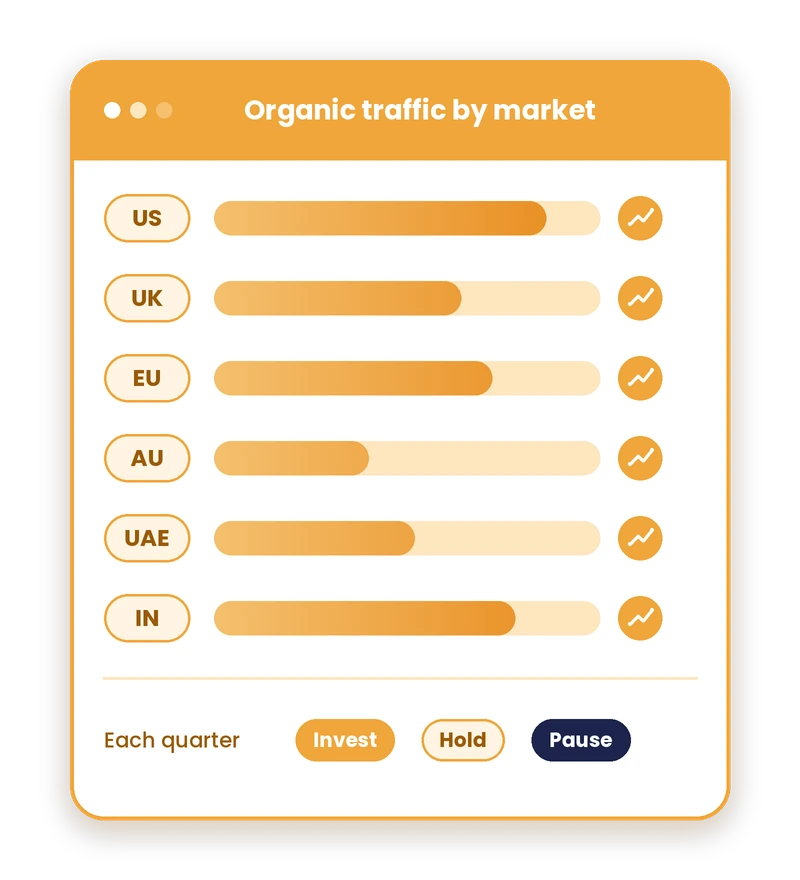
We report each market separately: indexed pages, rankings for local keywords, organic traffic from that country, and leads or sales. Global totals hide too much; a strong US month can cover up a stalled UK launch. Each quarter we recommend whether to invest more in a market, hold, or pause.