Case 1
A staging tag goes live
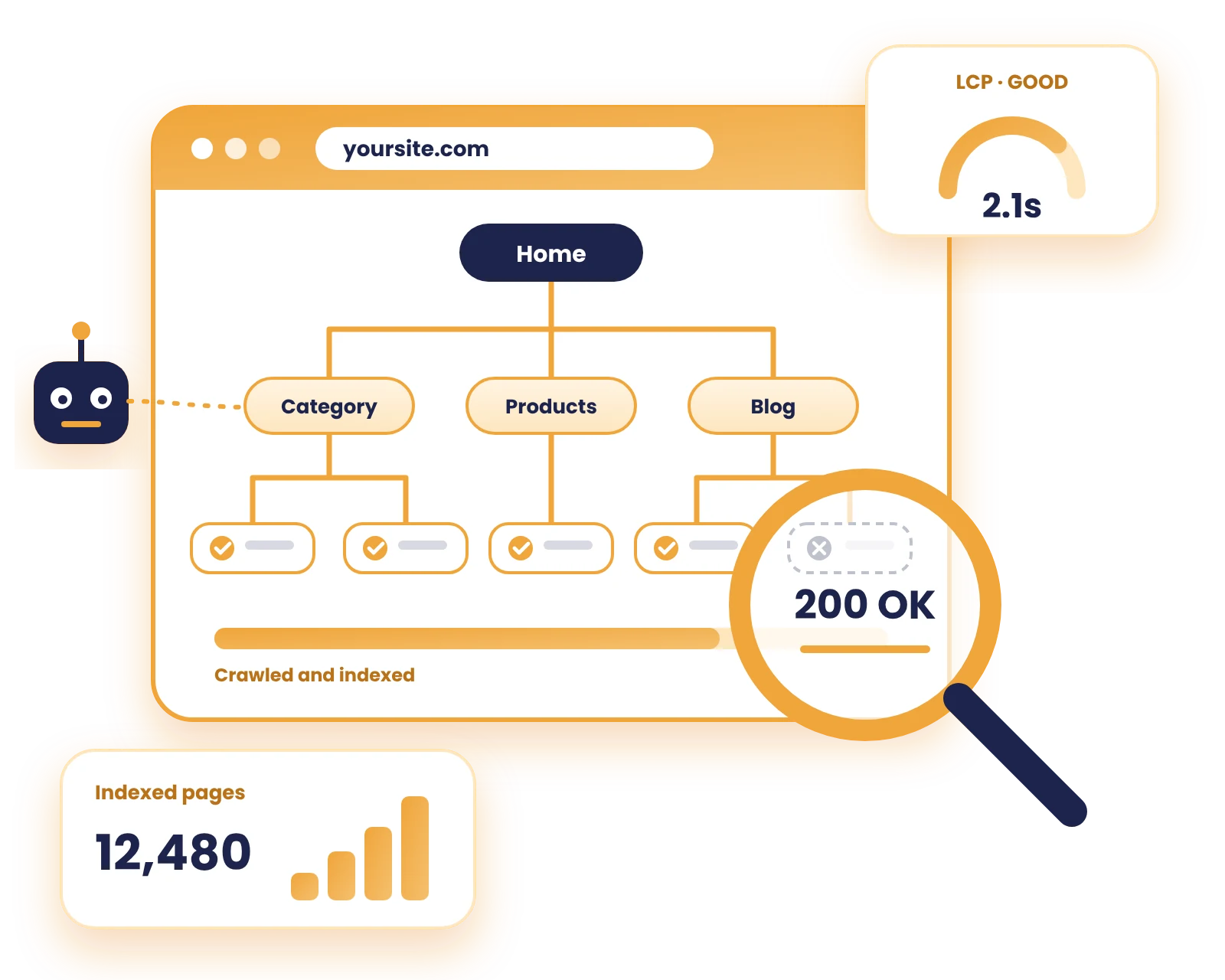
Nobody notices when a developer adds a noindex tag to a staging template and it ships to production.
Great content can’t rank if Google can’t find it, can’t render it, or can’t work out which version to index.
Leelija’s technical SEO services fix those problems at the source. We audit how search engines crawl and index your site, rank the issues by how much traffic is at stake, and hand your developers clear tickets (or fix them ourselves). We work with businesses in the USA, UK, Europe, Australia, the UAE and India.

Case 1
Nobody notices when a developer adds a noindex tag to a staging template and it ships to production.
Case 2
Or when a new filter quietly creates 80,000 URLs.
Case 3
Or when a redesign moves product links behind a JavaScript button that Googlebot never clicks.
A few weeks later
The traffic chart bends.
Crawler tools will flag hundreds of “issues” on almost any site. Most of them don’t matter. Our job is to find the handful that do, prove it with data from Search Console, server logs and rendered pages, and get them fixed without breaking anything else.
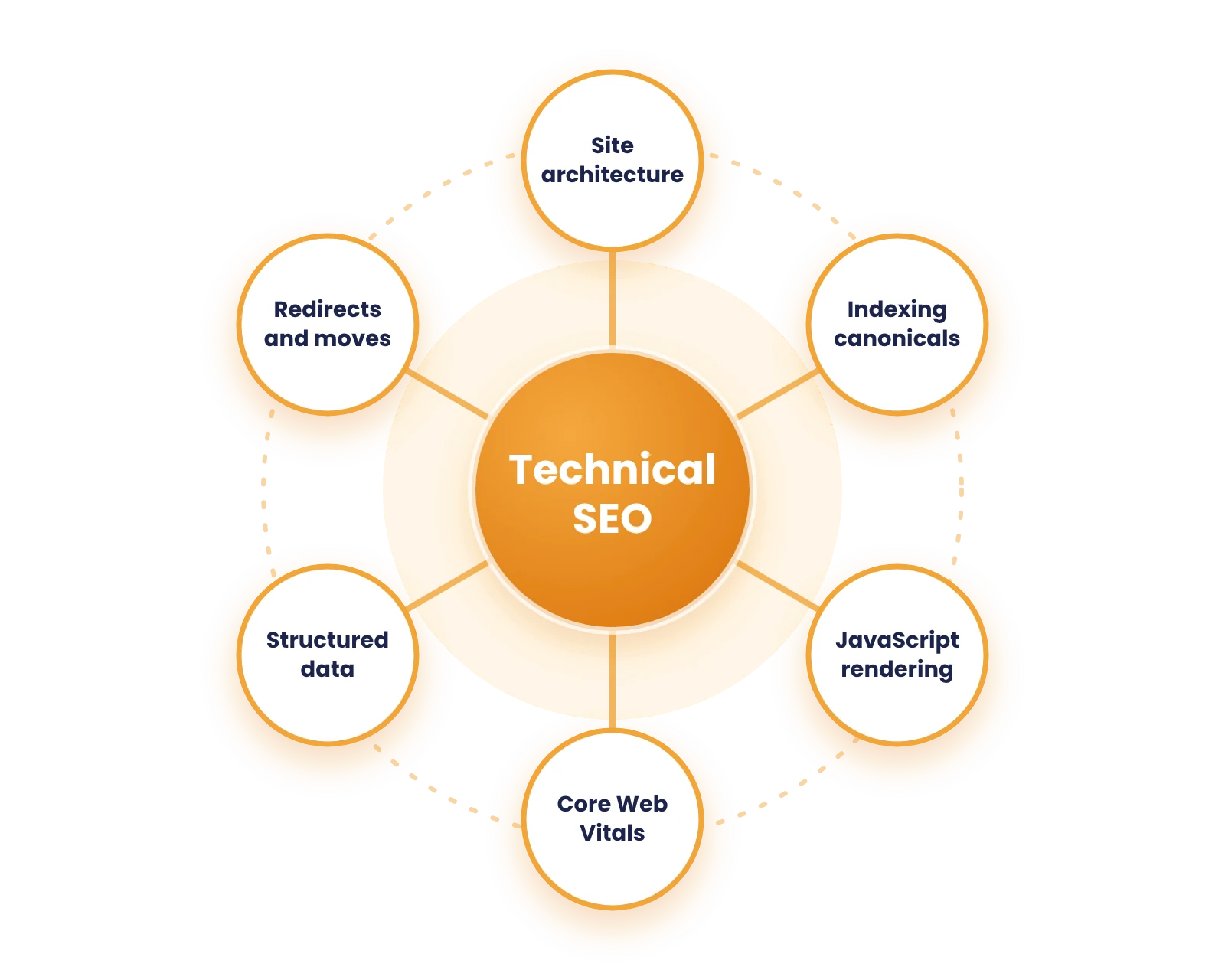
Technical SEO services improve the parts of a website that control whether search engines can crawl, render, understand and index its pages.
Think of it as technical SEO optimization for the whole site rather than one page. It covers site architecture, indexing and canonical signals, JavaScript rendering, Core Web Vitals and speed, structured data, redirects and migrations, and international setup.
SEO audit
Broad check of technical, content and links
Technical SEO services
Deep work on crawling, rendering, indexing and performance
SEO audit
A report
Technical SEO services
Ranked tickets, implementation support and retesting
SEO audit
Crawl tool findings
Technical SEO services
Crawl data plus Search Console, logs, rendered HTML and real-user speed data
SEO audit
A general health check
Technical SEO services
Traffic drops, indexing problems, slow sites, migrations, JavaScript sites
Google has published case studies from companies that improved their sites’ technical performance. A few of them:
Telecom, Italy
8%
more sales
What changed
Largest Contentful Paint improved 31%
Travel, India
~7%
more sales
What changed
INP on search pages cut from about 900 ms to about 360 ms
News, India
50%
lower bounce rate
43% more pageviews on topic pages
What changed
INP cut from over 1,000 ms to 257 ms
Ecommerce, Finland
42%
more mobile revenue
What changed
LCP down 55%, CLS down 91%
These are other companies’ results, not Leelija’s, but they show why we treat speed and stability as revenue work.
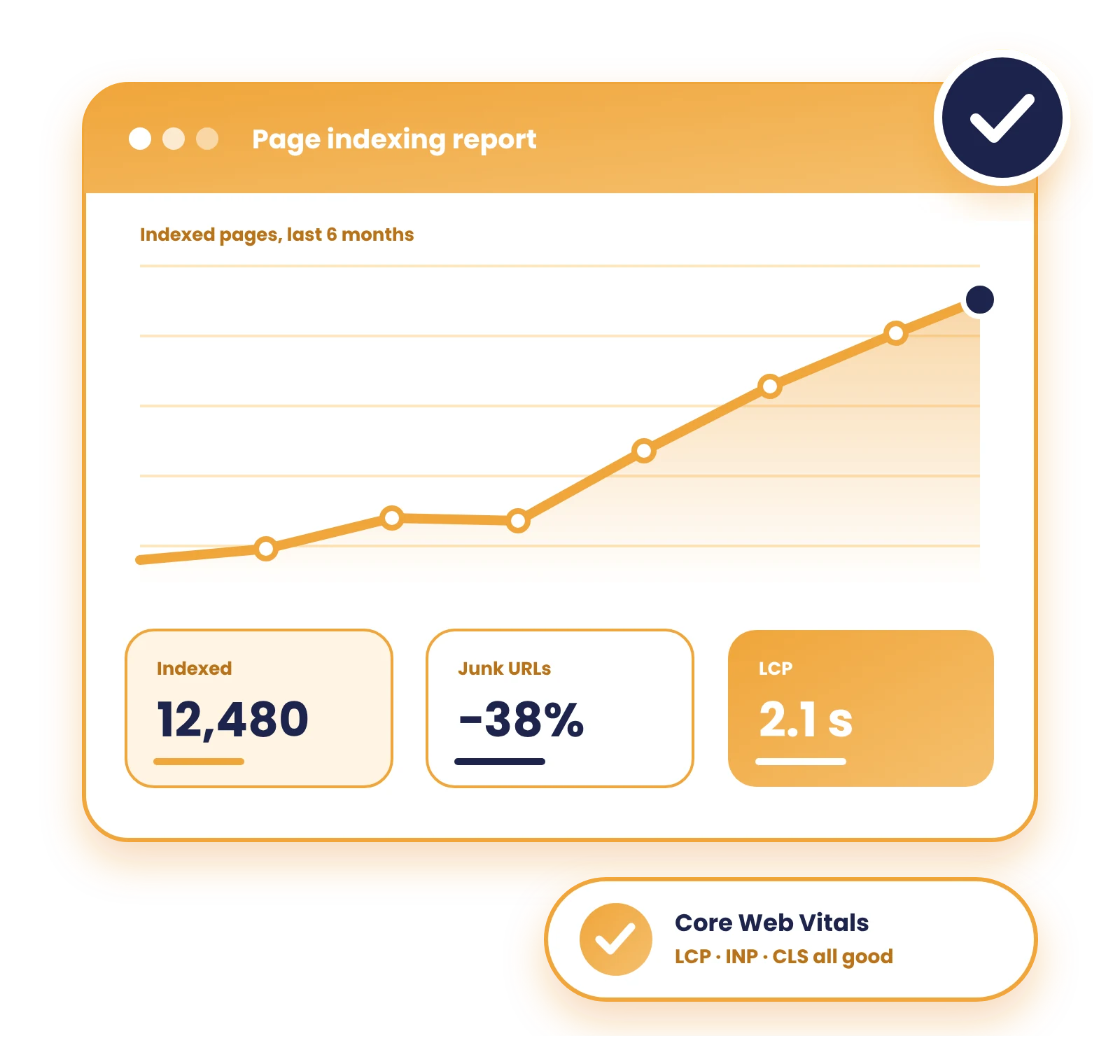
 Gets important pages discovered and indexed faster
Stops search engines wasting time on duplicate and junk URLs
Makes JavaScript content visible to Google
Speeds up pages, which helps both rankings and conversions
Protects rankings through redesigns and migrations
Gives developers clear, testable tickets instead of vague reports
Keeps AI search crawlers able to reach the pages you want cited
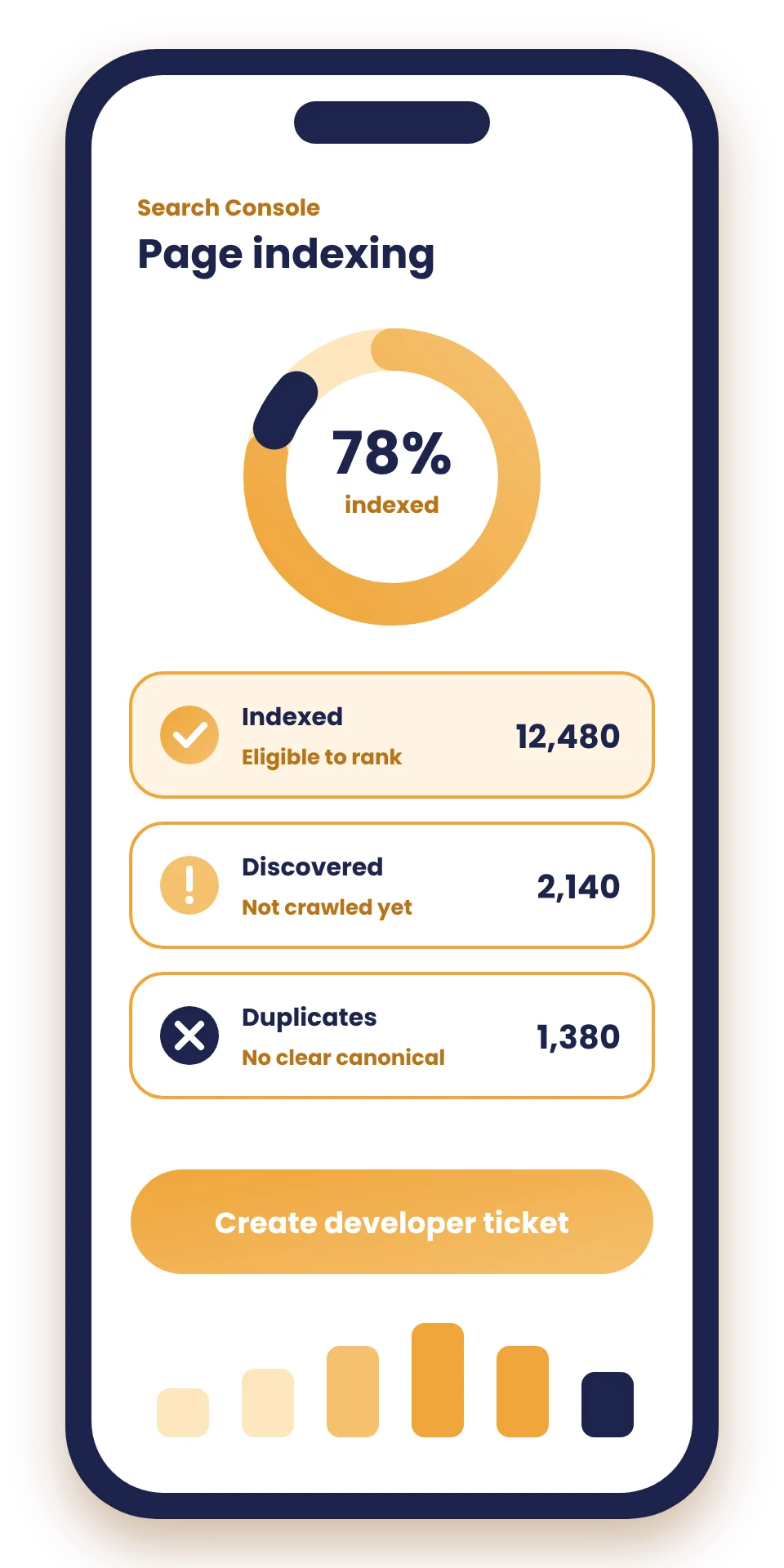
Search Console’s Page indexing report tells you a lot, if you know how to read it. These are the statuses we see most often.
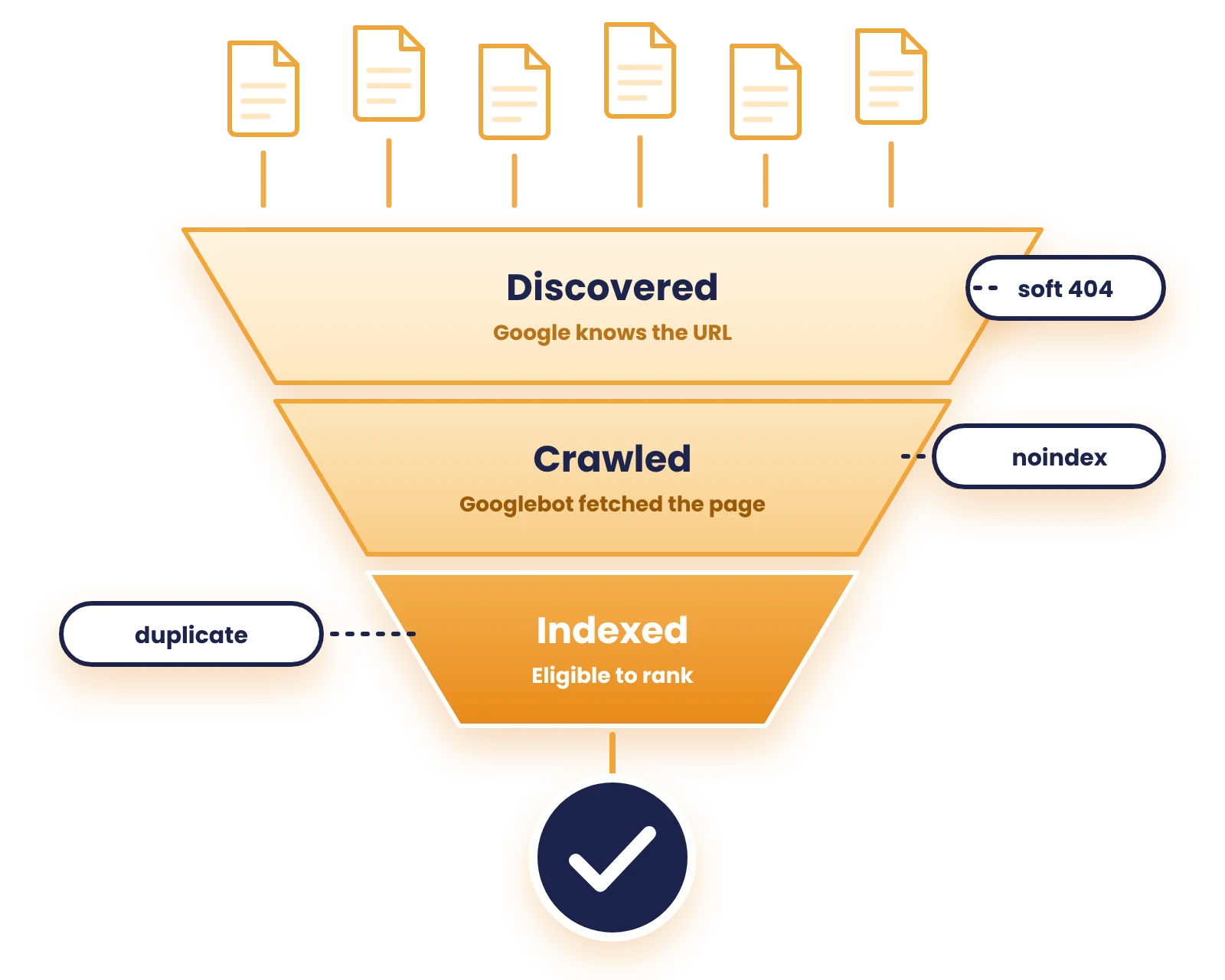
Discovered – currently not indexed
Needs a look
What it usually means
Google knows the URL but hasn’t crawled it
Typical fix
Stronger internal links, fewer junk URLs competing for crawl time
Crawled – currently not indexed
Needs a look
What it usually means
Google crawled it and decided not to index it yet
Typical fix
Make the page more useful and distinct, or consolidate it
Duplicate without user-selected canonical
Needs a look
What it usually means
Several URLs look the same and none is marked as the main one
Typical fix
Add a clear canonical and fix internal links
Alternate page with proper canonical
Usually fine
What it usually means
Working as intended
Typical fix
Usually nothing
Soft 404
Needs a look
What it usually means
The page returns 200 but looks empty or missing
Typical fix
Return a real 404/410, or add real content
Excluded by ‘noindex’ tag
Needs a look
What it usually means
A noindex tag is present
Typical fix
Remove it if the page should rank
Blocked by robots.txt
Needs a look
What it usually means
Crawling is blocked
Typical fix
Unblock if the page should be crawled
We work from real-user data (Chrome UX Report and Search Console) first, then lab tests, against Google’s thresholds.
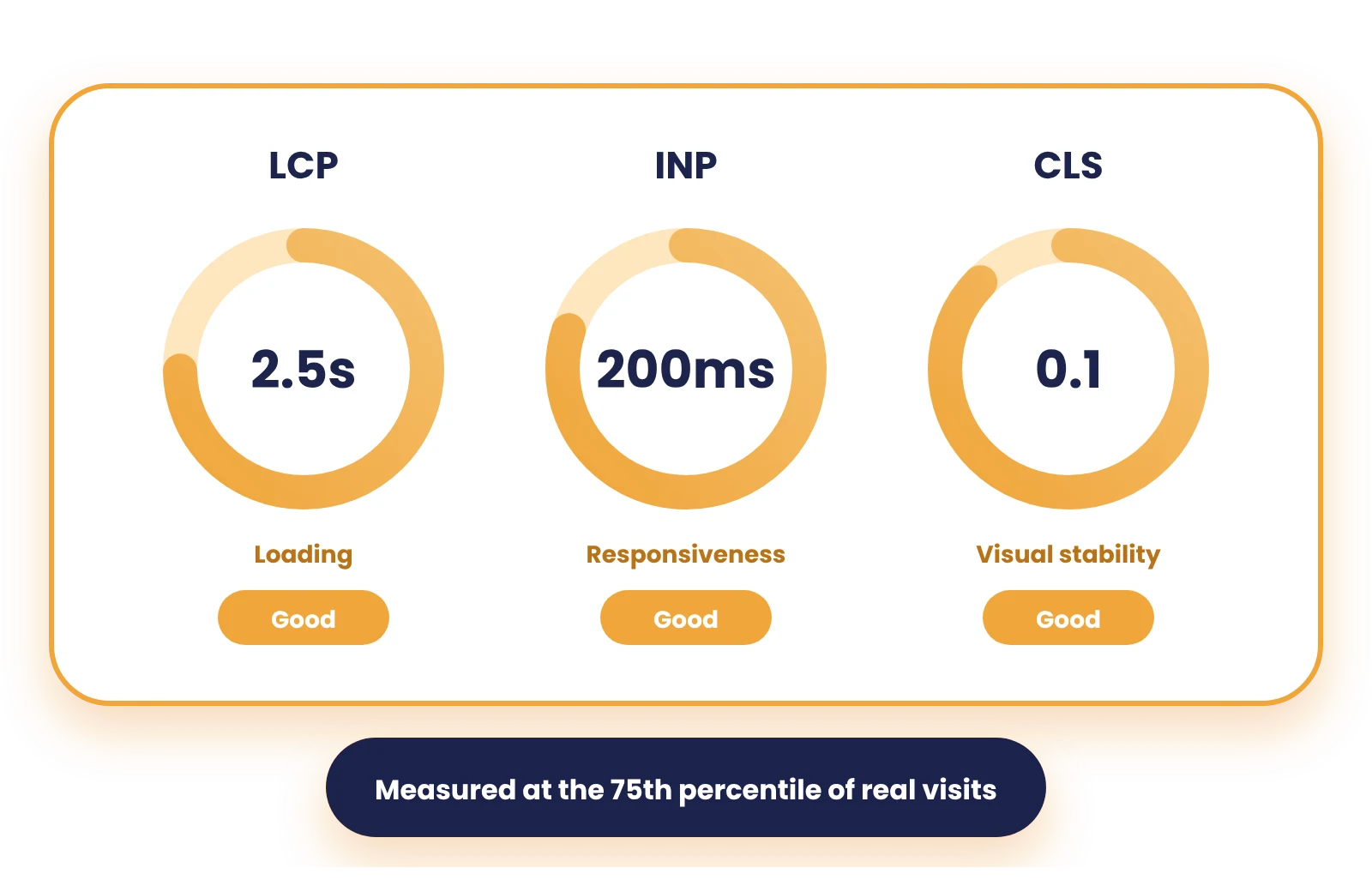
Largest Contentful Paint
Measures
Loading speed of the main content
Common fixes
Server rendering, image preloading, faster hosting, fewer render-blocking scripts
Good
2.5 s or less
Interaction to Next Paint
Measures
How fast the page responds to taps and clicks
Common fixes
Break up long JavaScript tasks, cut third-party scripts, lighter event handlers
Good
200 ms or less
Cumulative Layout Shift
Measures
How much the layout jumps around
Common fixes
Set image and ad dimensions, reserve space for banners, stable font loading
Good
0.1 or less
Google measures these at the 75th percentile of real visits, so a fast test on your office Wi-Fi doesn’t count for much.
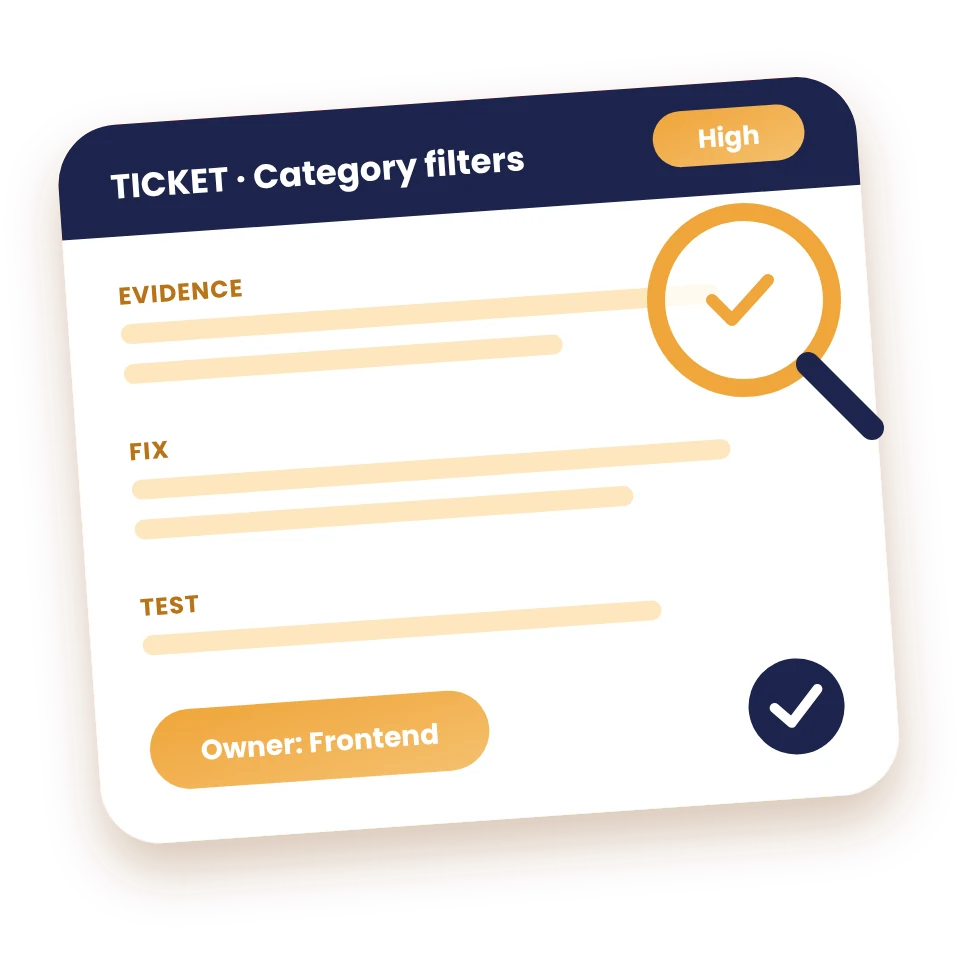
Every issue we report reads like this, so your developers can pick it up without a meeting.
The numbers above are an example of the format, not a client result.
Every finding is backed by data you can check. If we can’t show it matters, it doesn’t go at the top of the list.
No 200-row exportsIndexing and performance data, compared against what we find in the crawl.
For bigger sites, what Googlebot actually requests, not what we assume it does.
What Google sees on key templates once JavaScript has run.
Verified Findings
Evidence-backed fixes
Real-user speed data first, then lab tests.
Every template and URL pattern, mapped and compared with the index.
Status codes, redirect chains and robots.txt, checked end to end.
A structured, evidence-led approach to identifying technical issues, prioritising improvements and making your website easier for search engines to understand.
Search Console, analytics, crawl, CMS and (for large sites) log access; record current indexing and speed
Search Console, analytics, crawl, CMS and (for large sites) log access; record current indexing and speed
Crawl, rendering checks, index analysis, Core Web Vitals, templates
Crawl, rendering checks, index analysis, Core Web Vitals, templates
Rank issues by traffic at stake and effort; agree a fix order with your team
Rank issues by traffic at stake and effort; agree a fix order with your team
Developer tickets, or our team implements
Developer tickets, or our team implements
Re-crawl, URL Inspection, Search Console trends for 4–8 weeks
Re-crawl, URL Inspection, Search Console trends for 4–8 weeks
Timelines depend on website size, complexity and development requirements.
Our team sits in Kolkata, India (IST, UTC+5:30). That’s a full shared workday with Dubai, your morning in London or Berlin, and your afternoon in Sydney. US clients get early-morning calls and a written update every day, so work keeps moving while you sleep.

India
Kolkata, IST (UTC+5:30)
Where our team sits

UAE (Dubai)
A full shared workday
Same-day calls and quick replies

UK and Europe
Your morning in London or Berlin
Daily calls early in your day

Australia
Your afternoon in Sydney
Calls in your afternoon

USA
Early-morning calls
A written update every day, so work keeps moving while you sleep
One named account lead
The same person on every call and update.
Shared reporting dashboard
See the same numbers we do, any time.
Monthly review call
We walk through the trend and the next steps.
Invoices in your currency
USD, GBP, EUR, AUD, AED or INR.
Technical SEO only pays off when the fixes ship and hold. Here is how we make sure they do.
Our custom web development team builds on WordPress, Laravel, React and Next.js, so we can fix problems ourselves, not just describe them.
Every finding is backed by Search Console, logs or rendered HTML. If we can’t show it matters, it doesn’t go at the top of the list.
Problem, evidence, fix and test, in your developers’ format.
Every fix is retested after release, and we watch indexing for weeks afterwards.
Technical SEO consultant expertise at a fraction of typical US and UK agency prices.
Ask these six important questions before choosing an agency to improve your website's technical SEO.
Will you use Search Console and server logs, or only a crawler tool?
How do you decide which issues matter most?
Can you show a sample ticket?
Can your team implement fixes on our platform?
How do you check rendered HTML on JavaScript pages?
How will you protect us during a migration?
Be cautious of agencies that make unrealistic promises, hide their methods or cannot explain the work they plan to do.
Audit “scores” out of 100
Long lists with no priorities
Advice to fix every warning
No plan to retest after changes ship
Choose an agency that provides transparent reporting, realistic expectations and evidence-based SEO recommendations.
Send us your URL and a line about what’s worrying you. We’ll take a first look in Search Console terms and tell you whether it’s likely a technical problem.
You send
Your URL and a line about what’s worrying you
We check
A first look, in Search Console terms
You hear
Whether it’s likely a technical problem
Leelija Web Solutions Pvt. Ltd. is led by Safikul Islam, CEO, and based in Barasat, Kolkata, India.
India
USA
UK
 Europe
Australia
UAE

Endurix is a community-driven running club dedicated to helping runners of all levels train smarter, race harder and recover better.

Technical SEO services cover everything that affects whether search engines can find, render, understand and index your pages: crawlability, site architecture, indexing and canonical issues, JavaScript rendering, Core Web Vitals and page speed, structured data, redirects and migrations, hreflang for international sites, and log file analysis on larger sites. At Leelija, every finding comes with a ranked fix and acceptance criteria your developers can test.
An SEO audit usually covers technical, on-page content and backlinks at a high level. Technical SEO goes deeper on the infrastructure: rendering, crawl paths, index signals, server responses and templates. It also includes fixing things and checking the fixes, not just reporting them.
Open the Page indexing report in Google Search Console and work by status. “Discovered – currently not indexed” usually points to weak internal links or crawl capacity. “Crawled – currently not indexed” usually means Google didn’t think the page was worth indexing yet. “Duplicate without user-selected canonical” needs a clear canonical. Fix the cause for a whole group of URLs, then use URL Inspection to test a sample.
Core Web Vitals are Google’s three user-experience metrics: Largest Contentful Paint (loading, good at 2.5 seconds or less), Interaction to Next Paint (responsiveness, good at 200 milliseconds or less) and Cumulative Layout Shift (visual stability, good at 0.1 or less). They’re part of Google’s page experience signals, but relevance and content still matter far more. The bigger payoff is usually conversions.
JavaScript SEO makes sure content and links that load through JavaScript can be rendered and indexed by search engines. It covers server-side rendering or static generation, making links real HTML anchor tags, avoiding content that only appears after a click, and checking that titles, canonicals and structured data are in the rendered page.
They can. A client-side React app may send almost empty HTML and rely on Google rendering it later. Next.js with server-side rendering or static generation usually avoids that. We check what Google actually sees using URL Inspection and rendered HTML, not assumptions about the framework.
About 1 to 2 weeks for a small or mid-size site, and 3 to 6 weeks for large ecommerce or enterprise sites with log files and several templates. Fixes and retesting take longer, depending on your development team’s release schedule.
Leelija’s technical SEO audits start from about US$600 for small sites, US$1,500 for mid-size sites and US$4,000 for large sites, with separate rupee pricing in India. Industry guides put standalone technical audits at roughly US$3,000 to US$30,000, so we’re well below typical US and UK rates.
Both. We write tickets for your developers, or our own web development team can implement fixes on WordPress, Shopify, Laravel, React and Next.js sites. Either way we retest after release.
Yes. We write each issue with the affected URL pattern, the evidence, the recommended fix and how to test it, in your Jira, Trello or GitHub format. We can join a call with engineering to walk through priorities.
On large sites the work shifts to templates, crawl budget, faceted navigation, log file analysis and release checks. Google’s crawl budget guide is aimed at sites with over a million pages, or over 10,000 pages that change daily. Our enterprise SEO service covers this in depth.
Sometimes. If the drop came from a technical cause such as an accidental noindex, broken redirects, a robots.txt change or a rendering failure, fixing it often brings traffic back. If it came from a Google update or stronger competitors, technical fixes alone won’t be enough. The audit tells you which it is.
Yes. For in-house teams that need a second opinion on a migration, a framework change or a confusing indexing problem, our technical SEO consultants work on an hourly or monthly basis.