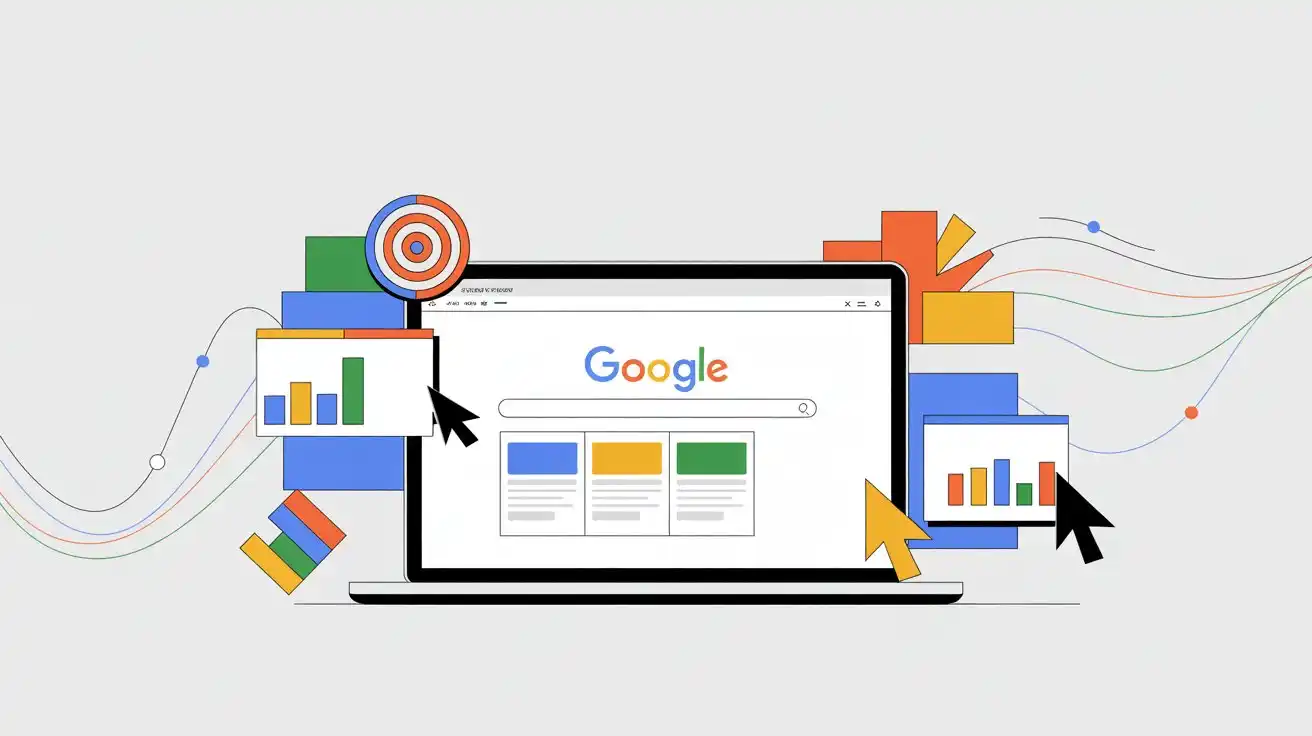
Ever found DoorDash services popping up on your screen when you tried to order food or groceries from Uber Eats?
…or maybe shoes from Adidas when you wanted to check out some Nike running shoes?
Well, it happens most of the time, doesn’t it?
It’s because competitor brands (Adidas, DoorDash) bid on terms like “Uber Eats food delivery” or “Nike running shoes” to appear right in front of you when you’re looking for services/products that both the brands offer.
Competitor Brand Bidding Might Change Your SEO Game!
It’s kinda those “smart” paid marketing strategies that put your brand just in front of your potential customers ( or maybe leads…) right at the time when they’re searching for a service that your brand offers & might be open to different brands/sellers.
For example, if you sell smart watches, you can simply bid on your competitors’ brand terms (like “Apple smart watches”) & instantly catch the attention of the users who are actually looking for Apple watches.
So, basically, you capture your potential customers’ interests in similar services/products you offer & direct them to your website right away!
But, Do It The Right Way!
When done correctly, competitor brand bidding can help you significantly boost your brand’s visibility, traffic, & gain an unprecedented edge over your business rivals.
Hi, there everyone!
Welcome to today’s blog, where we’ll be discussing how to PPC bidding on your competitors brand legally, profitably, & strategically for ultimate lead generation & conversion.
Understand The Concept First
The first thing you’ll ever feel when learning more about competitor brand bidding is that the topic itself is highly controversial.
Different brand strategists find the concept of competitor brand bidding differently.
No doubt the potential retaliation, stiff bidding wars, massive spikes in ad spending, & lowered portability make things more complicated. However, if done correctly, you can divert high-intent traffic to your own website, meant to go to your competitors’ otherwise.
This is The Smart Marketers’ Cup of Tea, Only!
Never mind, but here’s the truth…
Bidding on your competitors’ branded keywords/terms might make things worse for you, if not done strategically, because it’s literally gonna make the competition fierce for you.
👉You challenge their owned audience
👉It might increase your estimated ad spend budget
Then, Why Should You Bid on Branded Terms?
✔️Hijacking your competitors’ traffic
✔️Increased brand reputation
✔️Get a significant market share
✔️Increased Click-Through Rates
✔️To promote brand offers/FOMO ads
But, here’s the twist!
Just like you get significant market benefits by PPC bidding on your competitors brand, similarly, your business rivals can also bid on your brand-specific keywords to grab a market share or re-capture the lost traffic.
So, how can you protect your traffic & dominate the SERPs even after the retaliation?
Well, that’s exactly where you need to be a little bit strategic.
It’s Deeply Rooted in The Psychology Behind Brand Searches
First things first!
Did you know the entire concept of PPC bidding on your competitors brand was shaped primarily by the user search behavior, their intent, & decision-making process.
Here are the key triggers that shaped this concept into reality:
☑️High-intent (brand-specific) searches
☑️Users’ tendency to compare different brands/products
☑️The buyers’ attempt to constantly validate their purchasing decision
☑️The users’ curiosity about the alternatives & urge to explore more
☑️The buyers’ preference for better deals & attractive promotional offers
☑️Users notice other competitors even if they don’t click on the ads
Now, doesn’t it make enough sense how this concept came into being in the first place?
It’s not always the search results for the initial (branded/target keyword) terms that shape the buyers’ final decision.
There are always more options available for the buyers to explore online, and that’s exactly what makes PPC bidding on your competitors brand so effective in grabbing the attention of your competitor’s high-intent audience.
But, do you know?
When PPC Bidding on Your Competitors Brand Actually Makes Sense?
Honestly, it makes sense only when you offer superior value to your competitors’ high-intent audiences.
To be specific,
👉When you’re a lesser-known brand
👉You wanna capture high-intent searchers
👉The CPC of generic terms is super low
👉You wanna prevent your industry rivals from capturing your traffic
That’s when you should opt for PPC bidding on your competitors brand.
Now, there’s no doubt that competitor brand bidding gets you a really advantageous position in the industry.
But the thing is, sometimes, it might put your brand in great danger as well.
So, When You Should NOT Bid on Competitor Brands?
❎You should not get into all these if you feel like it might spark costly bidding wars. It’s because when you start bidding on competitors’ brand terms, they also start bidding on your key terms, potentially driving up your advertising costs.
❎Also, if your ad is less relevant to users, it would only lead to a wasted spend. Because if users are only looking for specific brands, it’s useless to spend your money on ads that bid on competitors’ brand terms.
❎Lastly, never ever bid on your competitors’ brand terms if you’re not sure about the value your brand would serve on their table. If the services/products you offer are inferior in user value compared to your competitors, or they don’t offer the users a better solution, users won’t be interested in your brand.
…and, it goes without saying that you shouldn’t bid on a larger competitor’s brand terms because bigger players in the industry can easily outspend you, turning your entire advertising efforts simply into ‘nothing’.
So, How to Move Ahead Legally?
PPC bidding on your competitors brand might be a bit risky if you aren’t careful enough. So, make sure you follow these legal, ethical, & platform considerations when planning to bid.
✅Bidding on a competitor’s trademarked name (brand name) is allowed, but you can’t use their trademarks (logos, symbols) in your ad copies (without permission).
✅Make sure your ad copies clearly talk about the services/products/entities/brand that you intend to promote. Misleading ad campaigns often receive strikes from trademark owners.
✅Google enforces strict trademark policies and automatically flags ads mentioning the competitors’ brand names in the text. So, make sure your ad copy highlights your brand's USPs clearly.
Competitor Research Really Matters…
Before we move ahead to discuss what smart bidding campaigns on competitors’ brand terms actually look like, you need to hear this!
Performing a thorough competitors’ research is a must if you wanna stay on the right track, develop a unique strategy, gain significant market share, & most importantly, defend your own brand in the long run…
Competitor Research Helps You:
☑️Understand the market dynamics
☑️Identify the market opportunities
☑️Get a hint of the potential threats
☑️Prepare a defensive strategy if competitors bid on you
☑️Brainstorm bidding strategies
☑️Draft compelling & informative ad copies
☑️Estimate your CPC
☑️Keep track of your ROIs
☑️Set realistic benchmarks for higher CTR
An in-depth market research helps you decide if PPC bidding on your competitors brand is a financially viable advertising strategy for you or not.
In short, it keeps you informed, always!
Now, we’ve reached the most anticipated section of this blog…
We know you’ve been waiting eagerly to know the steps to safely bid on your competitors’ brand terms.
So, Here’s How to Start Smart Competitor Brand Bidding
✔️Write value-added brand copies that convert
✔️Strictly follow legal recommendations
✔️Avoid trademark violations in ad copy
✔️Uncover high-intent keywords
✔️Allocate your budget wisely to prevent overspend
✔️Create a dedicated landing page & optimize it
✔️Use strong ad extensions to highlight your edge
✔️Assess your ROIs to evaluate profitability
✔️Segment your campaigns for accuracy & efficiency
✔️Structure your ad groups, test, optimize & measure KPIs
✔️Stay alert to competitors’ reactions
✔️Refine your bidding strategies according to market fluctuations
Plan Smart; Bid Smarter…
Your competitor brand bidding campaign should strategically target the competitor brand keywords.
So, it’s important to focus on its structure, bid on negative keywords (discount, cheap, etc.), implement smart bidding strategies, & adjust them accordingly to get high-quality in-market traffic.
But, hang on!
We’re not sorted yet…
In order to avoid risking ad disapproval, legal actions taken by your competitors, damaged brand reputation, appearing unprofessional, & lower conversion rates, you must be careful enough.
Bidding Errors That Might Cost You Compromised Brand Image
❌Generic campaigns
❌Blind bidding
❌Confusing ad copies
❌No clear value proposition
❌Using defamatory language
❌Propagating bidding war
❌Poor landing page experience
❌Ignoring mobile search intent
❌Aggressive marketing approach
❌Failing to set budget caps
❌Targeting poor keywords
So, basically, you need to focus on providing the target users with a better solution compared to what your competitors are already offering, in terms of services/products, clear value, user experience & seamless landing page navigation.
Now comes the real question!
How’ll you make sure that your bidding campaigns are working in reality?
Well, of course, by measuring the key metrics.
But, just tracking Cost-Per-Click (CPC) & Click Through Rates (CTR) can’t get you the full picture.
Key KPIs to Measure Success beyond CPC/CTR
👉Number of actual conversions (CVR)
👉The number of sales/sign-ups generated
👉Cost Per Acquisition of your bids (CPA)
👉Return on Ad Spend (ROAS)
👉The quality of the leads generated
👉Average Order Value (AOV)
👉Customer Lifetime Value (CLV)
👉Share of voice
👉Direct search volume
👉Bounce rates
👉Average time spent on your site
A spike in the number of CVR, ROAS, AOV, CLV, share of voice, direct search volume, sales, high-quality lead generation, more sign-ups, & of course, an overall increase in the average time spent on your site suggests that you’re PPC bidding on your competitors brand the right way.
Also, a low CPA & reduced bounce rates indicate efficient lead & sales generation within your pre-set budget.
But, Learn to Defend As Well…
Suppose everything is going well.
Your bidding strategies are also working effectively.
But have you ever thought of the other side?
What if your competitors start bidding on your brand terms?
It can lead to:
✔️Loss of your own customers
✔️Revenue erosion
✔️Damaged brand reputation
✔️Hijacked high-intent traffic
✔️Increase your ad costs
✔️Start bidding wars
✔️Confuse your high-value customers
To prevent all these, you need to protect your own brand, maintain your control over your own search results & ensure brand equity.
…and this is only possible if you’re aware of some strong defensive strategies that can safeguard the trust of your potential leads, long-term customers, & your brand loyalty.
Learn to Stop Your Rivals from Stealing Your Potential Sales
➡️Create dedicated brand campaigns
➡️Bid on your own brand name
➡️Create ad copies that help you achieve more impressions
➡️Monitor competitor activity
➡️Modify your ad copies accordingly
➡️File a trademark complaint (if necessary)
The best defensive strategy that you can rely on is to ensure organic brand protection from the very start.
Learn to dominate SERPs by creating authoritative & structured ad content, developing a solid marketing strategy, integrating robust IP protection, implementing proactive reputation monitoring & maintaining transparency at all costs.
So far, we’ve discussed all the aspects of safer PPC bidding on your competitors brand.
But, the question is…
Should You Do It?
PPC bidding on your competitors brand involves significant gains as well as high risks.
That’s why, before you come to a conclusion, it’s better to weigh the pros & cons side by side!
👉Define your objectives
👉Analyze market conditions
👉Consider the legal aspects
👉Identify your USPs
So, the ultimate decision depends on you; what you wanna achieve, your industry perceptions, the way you wanna move ahead, win the marketing game, your budget, & of course, the industry competition.
…Honestly, It’s Your Choice!
If you’re confident enough about the real user values your brand is capable of delivering, go for it!
…because everything involves risks.
But, when done correctly, it can literally blow your brand up on Google, resulting in increased visibility, engagement, traffic, & conversion.
It’s Not A Quick Fix, However…
PPC bidding on your competitors brand might help you capture your lost traffic & boost your brand visibility/awareness to a great extent as well.
But never think of it as a rapid fix to your already compromised brand image, low traffic, & poor conversion.
The digital marketing landscape is brutally competitive, and to beat your industry rivals with paid Google ads might take longer, especially if you’re starting from zero.
The Future Looks More Complicated!
The rapid transformation of Google Search systems, integration of Machine Learning (ML) & Google, turning into more of a conversational answer engine, the evolution of search platforms, a major shift in processing search queries with LLM integrated AI, & a changing definition of privacy standards have also started to influence the way intended buyers observe & react to Google Ads they see these days.
In The Future, You Might Expect to See:
✔️More accurate & optimized bids
✔️Predictive conversion rates & competitor activity
✔️More effective, contextual, & precise audience targeting
✔️Expanded brand bidding beyond core Google Search
✔️Reinforced focus on developing unique branding ideas
So, PPC bidding on your competitors brand will remain valid in the future also, but with a shift in the manual bidding efforts.
It’s definitely gonna be more sophisticated & diversified & you need to be more strategic as well as data-oriented in your bidding approach to get the most out of it.
Hope you enjoyed reading the blog & gained a deeper insight into the concept of competitor brand bidding and the dos & don’ts.
So, that’s it for today, see you in the next blog…