Whether you’re an e-commerce business owner or own a marketing brand online, you want the best Return On Investment (ROI).
Isn’t it?
You want as many customers as possible for your business who will purchase the service/product you offer.
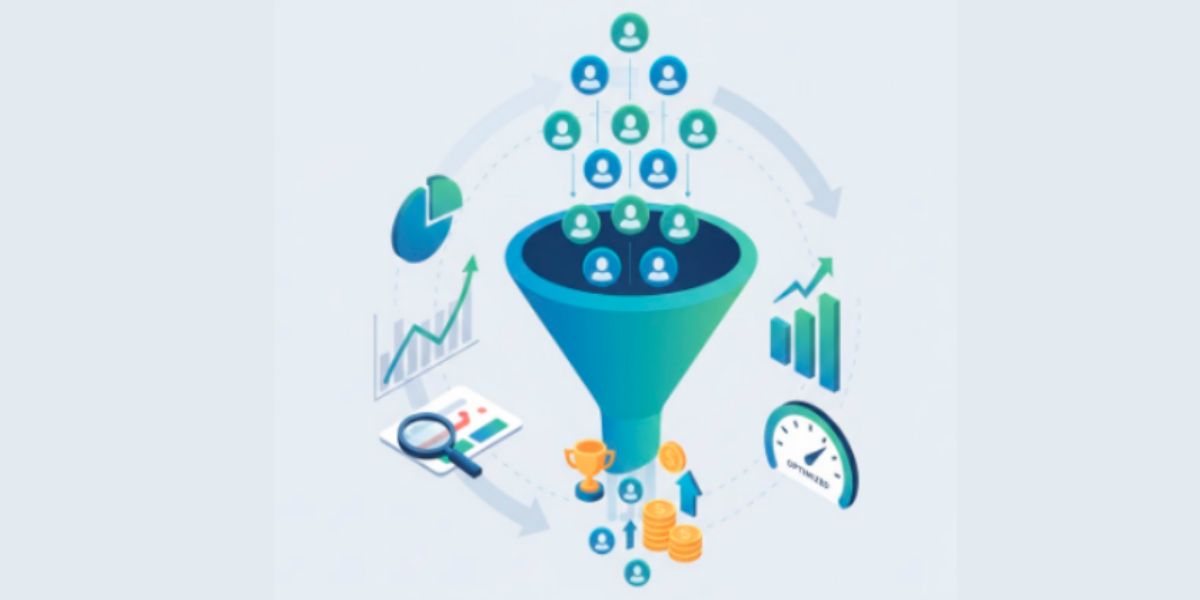
Conversion Rate Optimization (CRO) refers to the systematic process of increasing the percentage of users visiting your site/app who take a desired action.
It can be a purchase, subscription, form fill-up, a click on emails/links, anything that converts them or takes them closer towards becoming a paying customer of yours.
Hello, everyone.
Welcome to today’s blog, where we’ll be discussing all about Conversion Rate Optimization, how this works, how we do it, what practices got our clients the best business returns, and more.
So, stay with us till the end.
What Counts As A Conversion?
In simple words, CRO is all about getting more value from the existing traffic to your site/app/accounts by convincing & making it easier for them to complete specific business goals.
But not every action made by your users can be considered a “conversion”.
It’s a conversion only when your site visitor/user performs a desired business action or accomplishes a goal set by you.
Below Are Some of The Actions That Count As A Conversion:

👉Purchasing a service/product
👉Filling out a form
👉Submitting a contact form
👉Request a quote form
👉Signing up for an email newsletter
👉Subscribing to a free trial
👉Creating a website account
👉Registering for a service
👉Downloading a digital content/e-book/PDF
👉Downloading a software application
But why do these user actions matter so much for your business?
Why Conversion Rate Optimization Matters in The First Place?
… because it turns your organic traffic/website visitors into real customers.
Without the right CRO strategy, your traffic or lead-generating efforts will simply be wasted.
…and if you are investing in paid marketing/advertising via Google Ads, all your ad spends will be of no use if you fail to convert your leads.
CRO helps in achieving significant business revenues from the existing organic traffic on your site or for those you’re already paying for.

Here Are The Things to Expect If You Learn Performing CRO The Right Way…
✔️Converts your visitors into buyers
✔️Boosts your ROIs
✔️Lowers your Customer Acquisition Costs
✔️Enhances user experiences
✔️Gets you a significant competitive advantage
✔️Provides data-driven Insights into user behavior
✔️Maximizes your marketing spend
✔️Ensures your investments drive traffic
✔️Increases your Customer Lifetime Value (CLV)
Now here’s a thing that most users get confused about!
Conversion Rate Optimization & Traffic Acquisition Are Not Same…
If you think that your site generates enough traffic and that’s a valid proof that your business is growing, then, sorry to say, you’re wrong, my friend.
Unless your users take your desired action (in simple terms, get a step closer to becoming your paid customer), it’s not a conversion.
So, to put it clearly, traffic acquisition might take you a step ahead in your digital marketing journey, but it’s only when someone performs your desired action that you get a conversion.
Some True Facts about Industry CROs
Around 2-3 percent conversion is actually considered good enough for small/medium-scale websites, though top-tier sites usually have a conversion rate of 11+%.
According to a study report, businesses across industries usually experience 2.35% conversions, whereas only the top ones reach around 10% to 11.45%.
How We Helped One of Our Clients & How?

However, we worked with a solar company in the US and converted 55% of their organic traffic into real customers with competitive analysis, site optimization, technical site audit, & most importantly, by improving the overall user experience, clear CTAs, & by implementing simpler checkout processes.
Well, That’s Not All…
The company is not the only one that has experienced a huge growth in its conversions.
It’s certainly possible to aim for higher Conversion Rate Optimization if you know the right way.
For example, we boosted client conversion for a real estate developer brand in the UAE by 65% just by implementing live chat sessions.
So, it’s all about engaging with your leads & guiding them towards the right direction.
Now the biggest question is how…
Well, that’s exactly what we’ll discuss now, and once you get the idea of how CRO works, you can even come up with your own CRO strategies. (though we’re always here to help!)
Behind-The-Scenes of CRO
The process of Conversion Rate Optimization is a complex one because a lot of things happen behind what looks like a simple action taken by your leads.

Here are The Key Steps behind Real CRO
☑️Define your business goals first
☑️Track user behavior by using analytics, heatmaps, session recording & surveys
☑️Map the user journey to pinpoint bottlenecks & analyze your conversion funnel
☑️Based on the user data, formulate calculated hypotheses about specific changes
☑️Develop variations for headlines, images, & forms
☑️Ensure proper A/B testing is performed
☑️Track your campaign performance
☑️Try to get better insights into what’s working for your brand & what’s not
☑️Identify the winning strategies & start afresh
This will help you stay informed about how your users are perceiving your brand, understand the buyers’ psychology, optimize your conversion funnel accordingly, and attract high-quality leads who are willing to complete your desired action.
Follow The Right Strategy & Be Consistent …
An effective Conversion Rate Optimization process involves expert identification of friction points, developing data-driven solutions, experimenting with different variations of the funnel, tracking real-time results, & implementing changes that would contribute to optimum conversion growth.
Understanding Conversion Rate: Types, Metrics, Myths & More
The best part about CRO is that it’s measurable and there’s a dedicated numerical formula that tracks the accurate conversions for your brand.
The Formula for Calculating The Conversion Rate

For example, if you own a blogging website and you got 10 newsletter sign-ups from 200 visitors, that means your conversion rate is (10/200)*100=5%
Now, if you divide your desired business actions into two categories, depending on your key business goals & smaller steps showing brand engagement, “conversions” can be classified into two categories.
Macro Vs. Micro Conversions
Both these types of conversions are different from each other. One focuses on your primary business goals, and another takes your leads one step ahead towards your conversion goals.
But when you want to grow your business online, you need both!
On one hand, micro conversion helps optimize the buyers’ journey towards sales; on the other hand, macro conversions help in achieving your primary business goals.
But is there any way to boost your conversion rates?
Here Are Some Factors Influencing Conversion Rates
➡️Navigation-friendly website design helps user retention
➡️Clear design layout improves user experience significantly
➡️Faster page loading speed results in reduced bounce rates
➡️Strong testimonials & positive reviews work as improved trust signals
➡️Mobile optimization of websites results in increased Average Time Spent by users
➡️Personalized & targeted content drives increased relevant & high-intent traffic
So, one thing is for sure!
Focusing on macro-conversions alone won’t help you boost your conversion rates. Also, conversion rate is a dynamic metric that requires regular tracking/testing.
CRO Vs. SEO Vs. Paid Advertising
The very fact that you’re reading this blog means that either you own a business or you’re planning to take your online brand to another level.
For that, Conversion Rate Optimization is the key…
But many brand owners play it the wrong way here.
CRO is not a magic formula that can instantly get you more business revenue. It’s just a part of the entire digital marketing process. CRO complements your SEO as well as paid advertising efforts (if you’re running paid ad campaigns) to drive more high-quality traffic & get the most out of them.
Role of CRO in Your Marketing Funnel

Your marketing funnel is a visual model that maps the potential customers’ journey from the stage of brand awareness to becoming your paying & loyal client.
The Stages of Your Marketing Funnel
👉Top of Funnel (TOFU) refers to the stage where you attract and inform your potential customers about your brand’s existence through ads, content marketing, & Search Engine optimization
👉Middle of Funnel (MOFU) is the stage where you engage your interested prospects with more details about your services/products (blogs, webinars)
👉End of Funnel refers to that stage of your entire marketing journey where you encourage commitments from your high-intent leads. In this stage, they move a step ahead towards your desired action (signing up for emails, subscribing, clicking on an offer link, etc.)
So, How Does CRO Help?
✔️CRO ensures effective landing page creation that captures your audience’s interest
✔️It involves optimizing product pages, comparison charts, & reviews pages for fostering user trust
✔️Conversion Rate Optimization strategies optimize your CTAs, checkout processes, forms, & payment options for sales generation
Also, CRO strategies, if implemented the right way, will improve your user experience, turn your customers into recurring clients, & foster long-term brand loyalty & Customer Lifetime Value
In short, CRO lowers your bounce rates & CPAs and dramatically enhances your ROAS.
But does that mean CRO plays a greater role in your business growth? Is it more important than optimizing your site for traffic growth?
Well, no!
Optimized website drives relevant traffic to your website, but Conversion Rate Optimization helps in converting them & turning them into paying customers.
So, When to Perform CRO?
When:
➡️You have qualified traffic
➡️Your site generates sufficient traffic
➡️Traffic acquisition costs are high
➡️Conversion rate plateaus
➡️During major business campaigns (product launch, holiday rush, seasonal offers, etc.)
So, now you know exactly when CRO is going to deliver you the best results.
But do you know the core factors that drive conversion?
The Core Psychological Drivers
We think getting a deeper insight into the human psychology behind traffic conversions will help you align your Conversion Rate Optimization strategies accordingly.
✔️Users’ intent & motivation
✔️Users’ focus on the first price seen
✔️Positive brand reputation/testimonials
✔️Proven case studies (real users getting benefited)
✔️FOMO/limited-time offers/low stock alerts
✔️Industry awards/expert endorsements/certifications
✔️Value-driven & meaningful offers for free (e-book, PDF, tool)
✔️Ad copies that trigger the users’ emotions
✔️Brand copies that address the users’ pain points
✔️Marketing copies with proven stats/specs
✔️Minimalist design
✔️Clear CTAs
✔️SSL badges
✔️Transparent pricing
✔️Clear contact info
Learn The Trick to Real Conversion…
To be precise, the human brain processes information in a definite pattern.
For example, when users have multiple options to pick one, they would take longer to think about it & end up purchasing the thing.
These core psychological drivers will help you channelize your CRO efforts in the right direction so that you get multiple traffic conversions.
Now, if you’ve been waiting for the steps to perform CRO the right way, no more waiting!
We’ll discuss the entire process right here.
How Our Experts Perform Conversion Rate Optimization?
Our SEO experts have 7+ years of experience in different industry niches, and while performing CRO for 750+ global brands, they learned a basic truth that is “there is no space for guesswork.”
✅Data-Driven CRO Research
That’s why we always rely on data that is backed up with enough evidence and research.
Our CRO campaigns are based on a dual-lens approach that takes both quantitative as well as qualitative data into consideration.

We use:
✔️Google Analytics to track bounce rates/traffic sources
✔️Funnel analysis to analyze friction & conversion tracking (form fill-ups/purchases)
✔️Heatmaps to identify high-engagement zones
✔️Surveys and interviews to understand the users’ pain points
✔️Session recordings to uncover usability bugs & user behavior
✔️Real-time polls to get better insights into on-site feedback
We identify conversion barriers in our conversion funnel, lack of trust signals, & tech errors (poor graphics, UX design), instead of focusing on traffic increase, random A/B testing, & intuition-based UX/UI for effective traffic conversion.
✅Set Your CRO Goals and KPIs
Did you know?
Setting definite, achievable, & effective Conversion Rate Optimization goals will help you track your user engagement, number of new conversions (sign-ups/downloads), & maximize your sales/leads.
Here Are The Primary Vs. Secondary Conversion Goals Set by Us

Depending on The Goals, We Also Set Our KPIs…
Our primary KPIs help us measure our campaign success directly, such as conversion rates, CPAs, and CLVs. However, our secondary KPIs help us in tracking the vital engagement metrics such as Form Completion Rate, effect on Bounce Rates, and Click-Through Rates.
By using tools like Google Analytics, Hotjar, etc., we continuously test, analyze, & refine our conversion goals & strategies & help users make informed decisions. Our experts ensure effective CRO efforts that support increased market share, ROIs, brand awareness & maximum sales.
However, understand your users’ journey before mapping campaign optimization & conversion goals.
✅User Journey and Funnel Optimization
Mapping your potential customers’ path (in simple terms, “buyers’ journey”) will help you refine your conversion funnel.
For example, to boost conversions quickly, we focus on short-term fixes like clear CTAs, streamlined forms, improved page loading speed, etc. However, for lasting effects, we incorporate deeper conversion strategies, e.g., personalized A/B testing, improved site structure, overall content optimization & improved UX/UI.

So, mapping the users’ journey & funnel optimization will help you:
👉Define your users’ personas/goals
👉Identify the previous interaction with your users
👉Get better insights into their emotions/psychology/motivations
👉Analyze the drop-off points (where users leave the path)
👉Identify the leaks & friction points
👉Review recordings of users who dropped (find out why they left)
Based on these observations/reports, you can conduct specific interviews/surveys to get real customers’ feedback, learn about the specific barriers (complex forms, confusing site navigation, etc.) that caused the drop-offs, and fix the funnel leaks with targeted solutions (better graphics, user experience, content, or simplified checkout process).
✅Landing Page Optimization

If you want real brand conversions, focus on optimizing your landing page because it’s the first thing that your users interact with after learning about your brand.
So, make sure it’s designed in a way that not only eliminates distractions but also guides them toward a single conversion goal (desired by you).
Here Are Some Tips to Optimize Your Landing Page:
👉CTAs & USPs should be visible so that they capture your users’ attention in just 3 seconds
👉Keep the headline precise, value & benefit-driven (it should clearly explain why your service/product is worth the user’s time)
👉Implement “F” and “Z” structural patterns to maintain visual hierarchy
👉Use white space strategically for improved readability & a sense of luxury
👉Incorporate contrasting colors to make your CTAs pop on the screen
👉Maintain message match between the ad/traffic source for reduced bounce rates & improved trust
👉Make sure that your landing page loads faster
👉Use thumb-friendly buttons because 60%+ users navigate websites on mobiles using just the thumb
👉Focus on responsive page layouts for a seamless & optimal user experience across all devices
Watch Out for These…
Also, never add too many links that might distract your users’ attention and lead to drop-offs. Moreover, text-heavy layouts, walls of text throughout the landing page are big NOs if you want to drive major traffic conversion.
In short, prioritize user satisfaction while designing & optimizing your landing page.
✅Copywriting for Conversion Rate Optimization

Persuasive copywriting is an effective way to guide your users toward a specific action.
Here Are Some Quick Tips for Pro Copywriting:
👉Focus on how your services/products will help your users (the outcomes, not the direct features)
👉Clear CTAs that are action-oriented and create urgency/excitement
👉Address your users’ doubts & pain points through your copy (e.g., “Money-Back Guarantee”, “100% effective”, “Trusted by 20K+ Global Customers, etc.)
👉Use power & emotional words to create urgency (e.g., “free”, “new”, “proven”, “exclusive”, etc.)
👉Maintain a consistent brand voice throughout your marketing copy to resonate with the target audience
👉Use bullet points, short paragraphs, bold texts & white space to highlight specific phrases & data
Optimize Your CTAs for The Best Results
Designing CTAs the right way is crucial because these buttons actually convert your traffic. So, they must stand out!
We primarily use 6 types of CTAs & they are:
✔️Lead generating CTAs (“Connect with us”, “Give us a call”)
✔️Sales/purchase CTAs (“Add to cart”, “Shop now”)
✔️Sign-up CTAs (“Subscribe now”, “Join our community”)
✔️Click-Through CTAs (“Learn more”, “Read more”)
✔️Social sharing CTAs
✔️Video play (“Watch this now”)
We Place CTAs Strategically for Maximum Impact
Now, we place these CTAs at definite places based on your objectives.
For example:
☑️We place it within the content where the users already feel engaged.
☑️Above the fold, where we want users to take immediate action.
☑️Similarly, we add the CTAs below the fold, where we need to build a narrative first.
Also, we add multiple CTAs at different stages of the funnel (depending on the need).
Don’t Underestimate The Design & Color

Also, we make sure the CTAs we add pop against the background to better utilize the white space and capture the users’ attention right away.
For example, the CTAs that we’ve added to our website are in orange because they seamlessly pop out with the background color and also draw the focus of our users because of being surrounded by the white space.
Some of the most suitable colors that you can use while designing your CTA buttons include green, blue, red, etc.
Most importantly, always start your CTAs with strong verbs, and for the best results, create urgency or FOMO (Limited Time Offer).
✅Streamline The Form Submission & Checkout Systems

Did you know?
Lead submission forms and your platform’s checkout process can drastically improve your traffic conversion rates.
By minimizing the cognitive load & physical effort for the users, you can directly increase your conversion rates.
Things We Do to Remove Barriers:
☑️Remove unnecessary fields
☑️Mark the submission fields clearly
☑️Break long processes into manageable ones
☑️Integrate real-time error-handling systems
☑️Use badges to reduce fears during sensitive data entry
☑️Eliminate the high-friction wall of account creation
These steps not only speed up the checkout process but also prevent user confusion, unnecessary clicks, fears, doubts, and build trust with them, resulting in a smooth guest checkout.
✅A/B Testing & Experimentation

A/B testing (split testing) is a controlled experiment that involves comparing two versions (A vs. B) of your webpage/ad copies (in this case) with users to find out what performs better and what does not. Based on your observations, you can modify, adjust, or refine your conversion strategies and get better outcomes.
Here’s How We Perform Experimentation:
☑️Focus on one variable at a time
☑️Observe specific impact
☑️Ensure that the results are reliable
☑️Record setup
☑️Track results
☑️Note down our learnings
☑️Alter our strategic methods accordingly
Based on the client’s needs, we either go for A/B testing or Multivariate Testing (MVT) to test multiple elements and find the best combination (headline, image, CTAs). Also, we use test prioritization frameworks to choose what to test first, for example, ICE (Impact, Confidence, Ease) and PIE (Potential, Importance, Ease).
But keep one thing in mind.
Never stop your testing prematurely, as this can lead to wrong decisions & might ruin your entire Conversion Rate Optimization efforts.
✅Focus on Trust Building & Boosting Brand Credibility

The real hack to boost your traffic conversions is to reduce skepticism, validate your brand’s claims, & make your customers feel secure about the decision they make.
…and the best way to do that is through trust building!
Things That We Think Will Help You Build Brand Trust:
☑️Authentic client testimonials
☑️Positive user reviews
☑️Star ratings
☑️Genuine case studies backed up by real data
☑️User-generated content (photos/videos/stories/posts from real customers)
☑️Trust badges & certifications
Also, make sure your brand has easy-to-find privacy policies and easy return policies that solidify your brand integrity further. Also, if you get negative feedback/user reviews, respond strategically that shows your accountability & brand’s commitment to users’ convenience or benefit.
Hang on!
Do all these feel a bit overwhelming?
Well, we’re here to take you a step closer to converting your traffic.
Personalize Your Conversion Rate Optimization Campaigns

When you segment your campaigns based on your target users’ behavior, demography, & traffic source, you basically tailor the buyers’ journey according to their individual requirements, driving increased conversions.
It helps you to:
✔️Increase ad relevance
✔️Boost user engagement
✔️Foster brand loyalty
We move beyond generic CRO fixes and ensure showcasing relevant products/offers to our users that seamlessly guide them from the stage of awareness to purchase/sign-ups, reduce friction, & boost brand revenues from existing traffic by addressing their specific pain points, requirements, & preferences.
Now that you know how to develop the right CRO campaign, it’s also important to learn about the costly mistakes that can ruin your conversion strategy.
Most of the SEO specialists still make these mistakes that negatively affect their conversion strategies.
❎Common CRO Mistakes to Avoid
❌Ignoring research
❌Skipping user analytics
❌No defined KPIs
❌No clear hypothesis
❌Ignoring user intent
❌Copying competitors blindly
❌Over-optimization of landing pages
❌Lack of documentation
❌Unstructured testing patterns
❌Inconsistent KPI tracking
❌Ignoring customer feedback
❌Relying on assumptions
❌Stopping tests too early
❌Ignoring segmentation
Most importantly, avoid cluttered landing page design & generic CTAs and never forget to optimize your ads/landing pages for mobiles.
So far, we’ve discussed almost everything that you need to know about performing conversion rate optimization campaigns.
Still, to make it easier for you to have actionable insights into real-world data & common pitfalls, here’s a dedicated case study on CRO.
Leelija's CRO Case Study & Example
We worked with an SaaS client in the US in 2025. The website was initially facing low competition rates on its primary sign-up forms, despite high-intent organic traffic. The potential customers were dropping off majorly before filling out & submitting the forms.
Strategies We Implemented
So, our experts redesigned the sign-up form using a no-code landing page and conducted A/B testing on the registration form to identify the technical bottlenecks, friction points, & removed the unnecessary field.
Before-and-After Metrics

Earlier, the website had a conversion rate of barely 3%.
After optimizing the landing pages & re-designing the lead submission forms, their sign-ups increased by 50% immediately. At present, the site is experiencing a sharp 45% increase in user acquisition rate, that led to an $2.56 million growth (approximately) in annual revenues.
Our clients’ business revenues have improved by around 67% in just 6 months due to increased organic traffic.
What Didn’t Work
➡️Long forms with too many fields
➡️Waiting for the developer bandwidth
How We Made It Work
✅Modifying the landing page
✅Continuous A/B testing
✅Optimizing the current conversion funnel
Future Trends in Conversion Rate Optimization

In the future, we can expect the current CRO trends to evolve…
The trends would center on next-generation AI & Machine Learning that understands user intent, behavior, & search context in real-time.
This would eventually reshape the pattern of content creation, fostering proactive interactions, a superior need for real-time webpage/ad content optimization, & the requirement to integrate smarter chatbots for personalized & conversion-focused interaction.
You might observe a shift in emotion-led ad design, hyper-personalized ad recommendations, and AI-integrated messaging bots for shaping unique buyers’ journeys.
After a few years, CRO is expected not to rely on cookies but on customer relationships to provide users with a seamless user experience across all electronic devices, foster voice, visual (AR/VR), & text-based interaction, & a consistent & well-optimized experience across all touchpoints for easier conversion.
Conversion Rate Optimization for Ultimate Brand Growth
Honestly, CRO is not a quick fix!
It’s an ongoing process…
If you want sustainable brand growth, you must focus on a structured methodology for optimizing your conversion funnels, generating better insights into user behavior, testing hypotheses, & implementing structural changes.
Trust The Experts…
Most of the reliable digital marketing organizations foster a “test and learn” culture when it comes to CRO because it’s about evolving, continuous experimentation, long-term growth, adjustments right on time, and not just the results.
At Leelija, we always keep the user at the center of our CRO framework. Our experts constantly analyze their pain points & focus on improving their experience on the website, which naturally increases the conversion rates.
By aligning our strategies with your unique business objectives, we make sure that our CRO strategies drive maximum conversion for your brand, ensuring profitable brand growth.
So, that’s it for today!
We hope you enjoyed reading the blog and learned something new.
See you at the next one.